Wednesday, February 4, 2026
Home Blog Page 82

Bitcoin up 2.1% after FOMC minutes signal possible QT slowdown

0


Key Takeaways

  • Bitcoin rose by 2.1% after FOMC minutes indicated a potential slowdown in quantitative tightening.
  • Fed officials are considering pausing balance-sheet reduction due to maximum employment and inflation progress.

Share this article

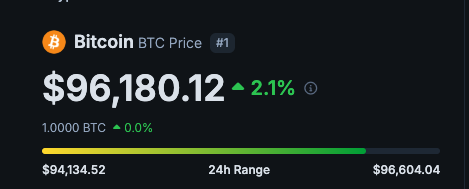
Bitcoin rose 2.1% over the past 24 hours after the minutes from the Federal Reserve’s January meeting revealed policymakers discussed potentially pausing or slowing their balance-sheet reduction program amid debt-ceiling concerns.

Bitcoin’s price climbed from $94,134 yesterday to $96,180 an hour after the release.
“Participants indicated that, provided the economy remained near maximum employment, they would want to see further progress on inflation before making additional adjustments to the target range for the federal funds rate,” the minutes showed.

Officials maintained the Fed’s benchmark policy rate between 4.25% and 4.5% at the January meeting.

The minutes revealed that “many participants noted that the committee could hold the policy rate at a restrictive level if the economy remained strong and inflation remained elevated.”

The Treasury Department has been employing extraordinary measures to extend its ability to pay federal government expenses since reaching the statutory debt limit in January.

President Donald Trump has supported House Republicans’ proposal to raise the debt ceiling by $4 trillion, though negotiations are expected to take months.

Policymakers are monitoring Trump’s economic policy plans, including proposed increased tariffs on US trading partners and immigration restrictions, which could impact inflation, labor markets, and economic growth.

Futures markets currently indicate investors are pricing in one rate cut in 2025, with the possibility of a second.

Share this article


World’s first XRP spot ETF to debut on Brazil’s leading stock exchange

0


Key Takeaways

  • Hashdex received approval to launch the first XRP ETF in Brazil.
  • XRP ranks as the third-largest digital asset by market cap.

Share this article

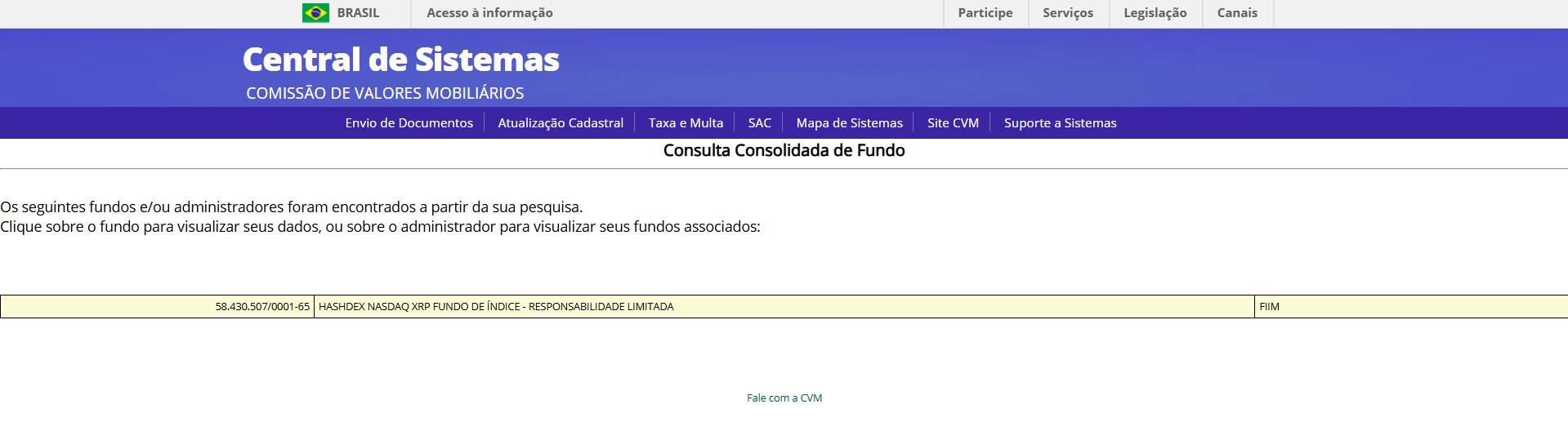
Brazil’s Securities and Exchange Commission (CVM) has approved the world’s first exchange-traded fund that directly holds XRP, Ripple’s native coin, from Hashdex, as shown in the database of the CVM and first reported by Portal do Bitcoin.

The newly approved ETF, called “the Hashdex NASDAQ XRP Index Fund,” is expected to launch on Brazil’s main stock exchange B3. The fund’s official launch date and trading details are yet to be announced. However, Hashdex has confirmed approval and indicated it will provide trading details soon.

The fund was officially established on December 10, 2024, according to information released by the CVM. Major financial services firm Genial Investimentos will serve as the fund’s administrator.

“XRP is a natural choice for an ETF due to its real-world utility, growing institutional demand, and its overall market cap,” said Silvio Pegado, managing director of Ripple in Latin America.

According to CoinGecko data, XRP currently ranks as the world’s third-largest crypto asset with a market cap of $152 billion, trailing only Bitcoin and Ethereum.

Hashdex, an established asset manager focusing on crypto investment products, has already introduced several crypto ETFs in Brazil and in the US.

Last August, the firm was granted approval to launch the Hashdex Nasdaq Solana Index Fund, an investment product that offers investors exposure to Solana. Hashdex also provides funds tied to Bitcoin and Ethereum.

“The approval of the first XRP ETF by the CVM demonstrates Brazil’s visionary approach to crypto markets and financial advancements,” Pegado added. “Through regulation and public consultations, Brazil continues to position itself as a country open to innovation, and we expect it to be central to more pioneering advancements in the crypto sector in the future.”

While Brazil has embraced crypto ETFs, the US has been more hesitant, even with recent Bitcoin and Ethereum ETF approvals. However, the regulatory shift under the new administration could pave the way for more crypto ETFs to gain approval.

JP Morgan predicts that spot Solana and XRP ETFs could draw up to $14 billion in investments during their first 12 months if approved by the SEC.

Share this article


DefiTuna founder uncovers network exploiting $200 million from meme coin launch on Solana

0


Key Takeaways

  • A coordinated scheme on Solana allegedly extracted $200 million from investors through meme coin launches.
  • DefiTuna’s Moty points fingers at Kelsier Ventures, Meteora, and M3M3.

Share this article

DefiTuna co-founder Moty Povolotski has alleged that Kelsier Ventures, Meteora, and M3M3 coordinated a series of meme coin launches on Solana to extract $200 million in profits at the expense of unsuspecting investors.

In a series of tweets on Feb. 17, Moty revealed that Kelsier Ventures had invested $30,000 in DefiTuna last month, but upon discovering Kelsier’s activities, DefiTuna refunded the investment and severed all ties.

Kelsier Ventures, led by CEO Hayden Davis, is a key entity in the Libra token launch. In a recent interview with Coffeezilla, Hayden admitted that the team sniped during the Libra token launch.

“I have personally gone the extra mile by risking myself and everything we built over at DefiTuna to try and get key players to speak up and start naming the bad actors and weeding them out,” the DefiTuna founder stated.

The founder disclosed the existence of “a massive spiderweb of influencers who are banking millions from the Meteora community enabled by the leadership team of Ben.”

According to Moty, Ben, or Ben Chow, planned to resign after the Libra scandal.

A video obtained by SolanaFloor and later quoted by Moty shows that he told Ben about Hayden’s alleged meme coin misconduct. Ben appeared to be surprised by the news, denied any involvement by himself or Meteora, and said he regretted connecting Hayden with other projects.

Following Moty’s tweets and the footage, Meow, the pseudonymous co-founder of Jupiter DEX, announced that Ben resigned from his role at Meteora.

Meow strongly denied any involvement of Jupiter or Meteora in insider trading, financial wrongdoing, or inappropriate token distribution.

More details surface

According to the evidence shared with SolanaFloor, Kelsier approached DefiTuna through a Lebanon-based employee to provide liquidity for M3M3, a platform allegedly owned by Chow. Projects launching on M3M3 were allegedly required to allocate a portion of the token supply to Kelsier’s group, as detailed by Moty.

Screenshots indicate that $2.4 million was extracted from community members through the MATES and AIAI token launches, with both tokens dropping 95% since launch.

In the Melania meme token case, Kelsier provided DefiTuna with 1% of the total supply, worth $100 million at peak, requesting an anonymous sale through Orca LP tokens as NFTs to avoid on-chain tracking. Hayden, however, told Coffeezilla that his team did not profit from the Melania token launch.

When questioned about Kelsier’s total profits from M3M3, Moty stated:

“Like if you take into account AIAI + MATES + ENRON + Bunch of other projects … + Melania + LIBRA…over 200M? And there are plenty more projects.”

Share this article


LIBRA token key figure Hayden Davis denies rug pull allegations, blames ‘plan gone wrong’

0


Key Takeaways

  • Hayden Davis claims the Libra token crash was due to a failed strategy, not fraud.
  • Davis is the custodian of $100 million from the Libra project.

Share this article

Hayden Davis, who facilitated the launch of LIBRA, addressed allegations surrounding the token crash, insisting that it resulted from a failed strategy rather than a deliberate scheme to defraud investors.

“People are saying this is a rug pull,” said Davis in a Sunday interview with YouTuber and crypto sleuth Coffeezilla. “That’s not objectively true. There’s still like…60 million on the bonding curve of liquidity that’s locked.”

“It’s not a rug…it’s a plan gone miserably wrong with a $100 million sitting in account that I’m the custodian of,” Davis added. “I would love instructions on what to do with it. I don’t want, I have no desire to be public enemy number one.”

LIBRA token team sniped at launch

Davis admitted that the project’s team engaged in sniping during the LIBRA token launch to control market manipulation by other potential snipers. The plan, as detailed by Davis, was to accumulate enough liquidity to control snipers.

“…so when the chart dips down it’s not going to crush the whole project, have Milei do the second round of videos and then inject all the capital back in, or at least the vast majority, and create like a mega like a mega Trump launch basically,” he explained, adding that complications arose when key marketing support was withdrawn.

Addressing President Milei’s withdrawal of support for the LIBRA token, Davis suggested that Milei had faced intense political pressure that might have caused him to panic and ultimately retract his endorsement.

“As somebody in his position, I would feel rightly,” Davis said. He’s not like a crypto-native person.” He also clarified that while Milei supported the project, it wasn’t officially endorsed by the government or considered his personal token.

Milei is facing criminal fraud charges for his role in promoting the LIBRA token.

LIBRA loses over 90% value amid insider trading and manipulation allegations

LIBRA lost more than 90% of its value within 24 hours of its launch, erasing over $4 billion in market value amid allegations of insider trading and market manipulation.

Investigations revealed a complex network of market manipulations involving KIP Protocol, Davis’ Kelsier Ventures, and various influential figures. Dave Portnoy, founder of Barstool Sports, disclosed that Davis informed him about LIBRA’s launch plan and sent him 6 million tokens, which Portnoy later returned.

Early on-chain analysis by Bubblemaps linked LIBRA to other projects including MELANIA, ENRON, and BOB, suggesting a coordinated manipulation system. The investigation identified connections between multiple wallet addresses and cross-chain transactions that pointed to organized price manipulation.

Speaking with Coffeezilla, Davis admitted to being involved in the launch of the MELANIA meme coin, but claimed the team did not profit from it.

“We definitely weren’t the big sniper,” he said. “We didn’t make any. There was no money made from the Melania team on any. We didn’t take any liquidity out. Zero.”

Share this article


Argentina’s president Javier Milei says he did not promote $LIBRA token, just shared it

0


Key Takeaways

  • President Javier Milei clarified he merely shared information about $LIBRA, not actively promoting it.
  • Milei met with Hayden Mark Davis for developing financing for entrepreneurs but denies extensive investor impact.

Share this article

Argentine president Javier Milei is defending himself amidst accusations of fraud and calls for impeachment following his promotion of the $LIBRA token. Speaking during an interview with Jonatan Viale on TN’s “¿La Ves?” on Monday, Milei claimed he simply shared information about the project rather than actively promoting it.

“I didn’t promote it, I shared it,” Milei explained. “I did it because I’m a fanatical techno-optimist.”

“I acted in good faith and I got slapped,” Milei said, addressing the controversy. He maintained that the incident affected only a small number of Argentines, with most investors being Chinese and American.

Explaining the reason for sharing, Milei stated that he shared the $LIBRA token information because he is enthusiastic about such projects and discovered it shortly after its creation.

“I shared this like I shared hundreds of things. My tweet was three minutes after the coin was created because I am a fan of this stuff,” he mentioned.

Milei claimed that those who invested in $LIBRA were well aware of the risks involved. He disputed claims of widespread impact, insisting that the actual figure was far less than 44,000.

“The claim that 44,000 people were affected is simply wrong. The real number is closer to 5,000, at most. And it’s highly unlikely any Argentinians were involved. These are sophisticated traders, volatility traders who knew what they were getting into,” he asserted. “…they did it voluntarily.”

The president revealed he met Hayden Davis, who facilitated the token launch, at Casa Rosada in October 2024. He said that Davis proposed creating a financing structure for entrepreneurs lacking traditional funding options.

“When the Libra thing became public, I spread the word,” Milei said, explaining that his first tweet was to help Argentines who do not have access to traditional financing.

When asked why he deleted the tweet, Milei said he removed it due to negative feedback.

“When people started saying my account was hacked, I pinned the tweet to show it was really me. But then the negative comments piled up, so I took the tweet down to avoid confusion. I never actually deleted it, though – I just hid it,” he said.

He denied government involvement in the operation but warned that “if the justice system determines otherwise, heads will roll.”

Share this article


FTX wallet moves Bitcoin ahead of creditor repayments

0


Key Takeaways

  • FTX has begun testing Bitcoin transactions ahead of creditor repayments scheduled for tomorrow.
  • Initial creditor repayments will prioritize customers with claims under $50,000.

Share this article

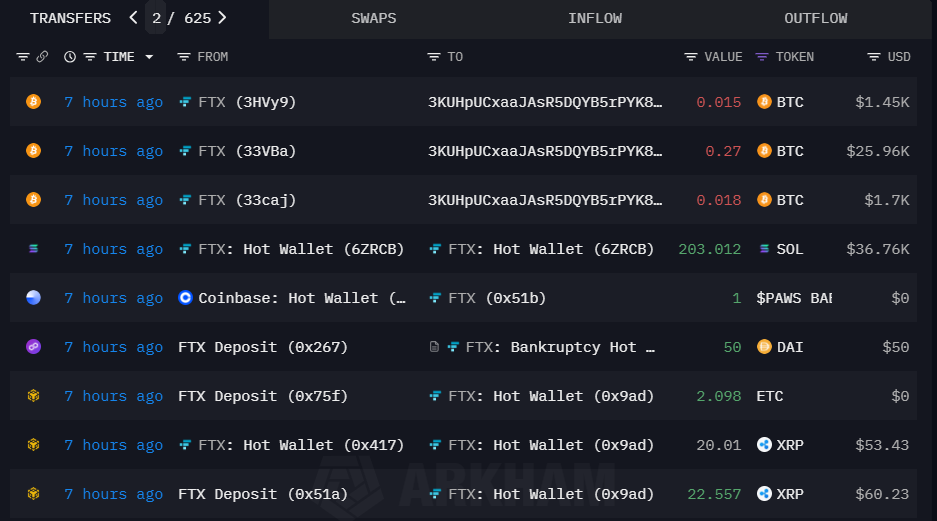
A wallet associated with the now-bankrupt crypto exchange FTX moved 0.3 Bitcoin, worth around $29,000, in three separate transactions early Monday, according to Arkham Intelligence data. The move comes as the FTX estate is set to begin repaying its first creditors on Feb. 18.

The motive behind these small Bitcoin transfers is unclear. Ethem Ozturk, co-founder of Muhabbit who first spotted them, speculates that they may be test transactions to make sure things go smoothly when the bigger payouts start.

According to the latest update from Sunil Kavuri, who represents the largest group of FTX creditors, FTX will initiate distributions to “convenience class” creditors, those with claims under $50,000.

Eligible creditors can expect to receive 100% of their adjudicated claim value, plus 9% annual interest calculated from November 2022, the month FTX declared bankruptcy.

Repayments will be based on crypto values converted to US dollars at the time of FTX’s November 2022 bankruptcy. While FTX has recovered more than $16 billion in assets, customers may face losses due to the recent appreciation of Bitcoin and Ethereum.

The exchange projects that approximately 98% of users will receive 119% of their claim value.

FTX’s reorganization plan officially took effect on Jan. 3, and repayments will soon begin. The first group of creditors is expected to receive their reimbursements by early March.

FTX will announce its plans for how the rest of its creditors will be repaid in the future.

Share this article


Sonic Launches $1M Mobius Hackathon

0


Sonic SVM, the first chain extension for Solana, has launched a hackathon to incentivize development of native decentralized applications and invited judges to assess the submissions. The Mobius Hackathon offers prizes to teams creating dapps on the gaming-optimized Sonic chain, whose mainnet goes live on February 27.

Sonic’s first dedicated hackathon features a prize pool worth $1M to reward builders of novel applications spanning a range of onchain verticals, from gaming to DeFi. The first-of-its-kind online hackathon commences on February 17 and will run until March 14, by which time the Sonic mainnet will be live.

Four hackathon tracks have been selected, with teams expected to develop applications that fall into one of the following categories:

Attention capital market: User acquisition, content tokenization across social media platforms such as Tiktok, Instagram, Whatsapp, Rednote.

DeFi: Asset launchpad, trading bot, yield generating, lending, MEV.

AI: Agent aggregators, tooling, initial agent offerings, and other infra.

Gaming: Mini games, social games, FOCG, high-ARPU games.

Sonic is seeking a panel of judges to evaluate submissions based on a range of criteria, including technical depth and practical application to determine real-world viability. They will also provide constructive feedback to ensure that all teams gain value from the experience and are able to optimize their applications.

By highlighting areas of excellence as well as areas for improvement, the judges will foster a positive learning environment in which all participants benefit from the hackathon. In addition to demonstrating a willingness to engage with builders and serve as mentors, judges are expected to be active on social media. 

By sharing updates on social media, engaging with participants, and promoting standout projects, judges will raise awareness of the caliber of applications being developed on Sonic SVM. In the process, they will help to spotlight the industry’s most promising up-and-coming developer teams.

Upon completion of the month-long event, the panel of judges will appraise the submissions before announcing the winner on April 2. The $1M Mobius Hackathon will catalyze development of Sonic applications while highlighting the network’s ability to scale Solana by providing a dedicated layer for high performance decentralized applications.

About Sonic SVM

Sonic is the first SVM network extension to launch on Solana for games and applications. Built with Sonic HyperGrid, a framework for orchestrating optimistic Solana rollups, Sonic aims to power the web3 TikTok App Layer to onboard the next one billion users.

Learn more: https://www.sonic.game/

Hackathon registration form for builders: https://sonicsvm.typeform.com/mobiushackathon

Builder group (for finding teams or sharing info): https://t.me/+S_eelN_07xswYTdl

Developer doc: https://docs.sonic.game/developers/additional-resources

Contact us for more info: https://t.me/derMondder