Wednesday, May 13, 2026
Home Blog Page 8

XRP snaps outflow streak as crypto funds log $1.2B ahead of FOMC decision

0


XRP-linked investment products swung back to inflows last week after shedding $56 million the week prior, as digital asset funds extended their winning streak for a fourth consecutive week.

According to CoinShares’ new report, Bitcoin led $1.2 billion in crypto fund inflows as institutional demand strengthened ahead of the upcoming FOMC meeting, where the Fed is expected to provide guidance on interest rate policy.

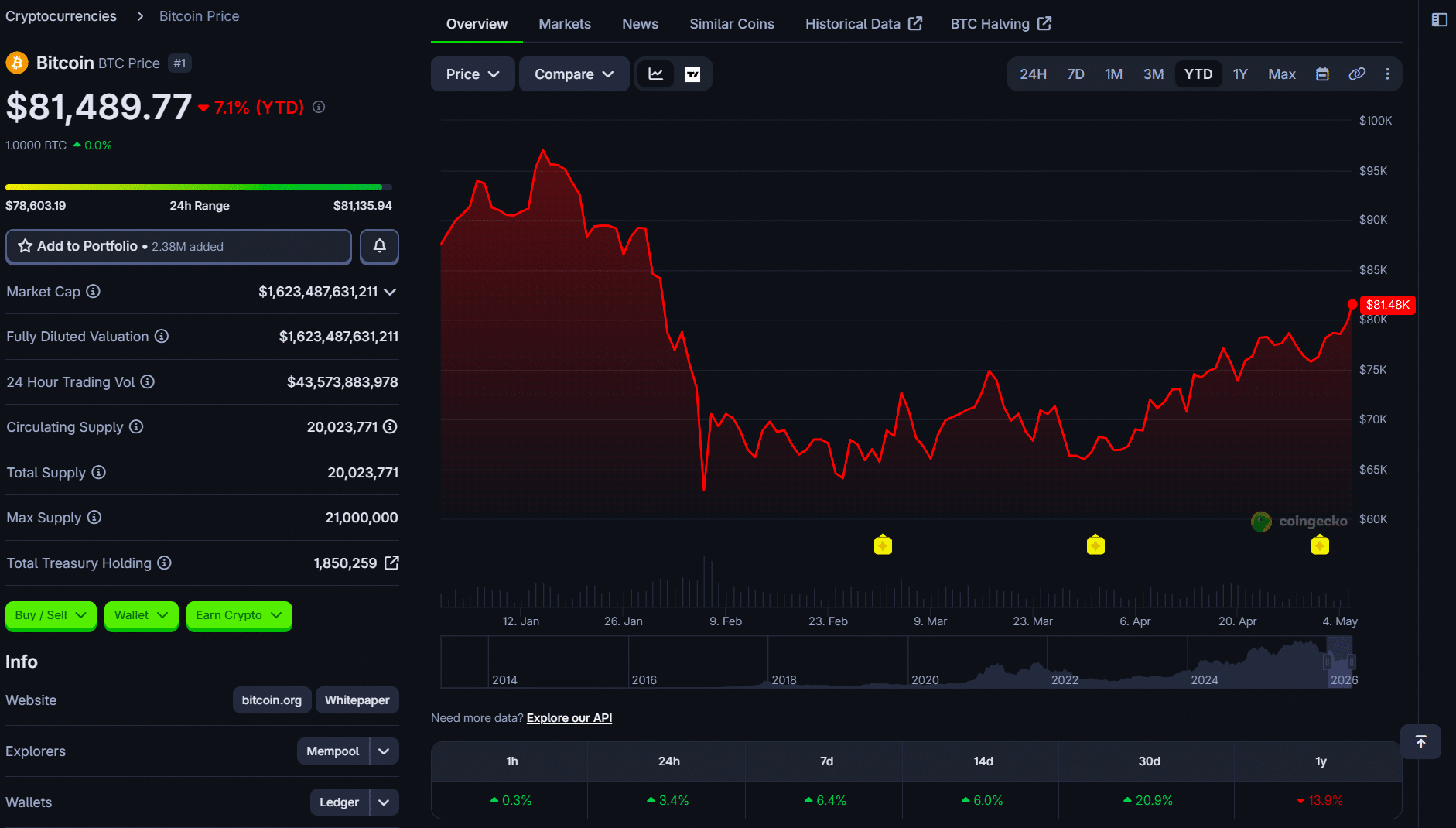
Bitcoin captured the bulk, attracting $933 million in a single week and bringing its year-to-date total to $4 billion. The asset was trading above $76,000 during the reporting period, its strongest showing since the correction that rattled markets in late February.

Ethereum pulled in $192 million, its third consecutive week above $190 million, while Solana and XRP collectively attracted around $47 million.

Regionally, the US accounted for roughly $1.1 billion of the total. Germany more than doubled its prior week’s contribution of $61.7 million. Switzerland, which had pulled in $138 million the week before, reversed course and added $35.2 million. Canada chipped in $15 million.

Blockchain equity ETFs, which hold shares of companies building on or around blockchain technology rather than the tokens themselves, recorded $617 million in inflows over three weeks, reaching record highs and reflecting surging investor interest.

The next major catalyst is the Fed meeting on April 28–29. With no rate move expected, Powell’s tone could either reinforce risk appetite or introduce downside risks.

Bitcoin slid below $77,000 after climbing past $79,000 yesterday, as the total crypto market value fell to $2.6 trillion, per CoinGecko.

Disclosure: This article was edited by Vivian Nguyen. For more information on how we create and review content, see our Editorial Policy.


Bitcoin keeps knocking on $80K, but the door won’t open

0


Bitcoin tried to break $80K twice in the past seven days. Both attempts ended the same way: a polite but firm rejection, like showing up to a club without the right shoes.

The price has since retreated to roughly $77K, down about 1.4% over the past 24 hours but still up 2.6% on the week. That weekly gain matters more than the daily dip, because it suggests buyers are stepping in at lower levels even as sellers defend the $80K ceiling.

The $80K wall and what’s behind it

Resistance levels in crypto aren’t magic lines on a chart. They’re price zones where enough sellers have parked orders to absorb incoming buying pressure.

At $80K, that selling pressure has proven formidable. Twice in seven days, Bitcoin rallied into that zone. Twice it was turned away. The pattern creates a psychological barrier on top of the technical one, because traders start expecting rejection and front-run the sell-off.

Here’s the thing. Double rejections at a key level don’t always mean failure. They sometimes precede a breakout, especially when fundamentals are strengthening underneath. Think of it like a battering ram. The door holds the first few times, but each hit weakens the hinges.

The broader market isn’t exactly cheering alongside Bitcoin either. Ethereum dropped 2.8% in the last 24 hours to hover around $2,281. Solana slipped 2.7% to $84. XRP sat near $1.39, doing its best impression of a flatline. DeFi as a category managed a perfectly round 0.0% gain over seven days, which is the crypto equivalent of running in place.

The Fear and Greed Index tells a more interesting story. It currently reads 47, which falls squarely in “neutral” territory. Just last week, it sat at 29, deep in “fear” mode. That 18-point swing in a single week is significant. Sentiment is improving faster than prices.

April’s track record and the ETF machine

April has historically been kind to Bitcoin. If the month closes in the green, and it’s currently on pace to do so, it would mark the 9th positive April out of 14 in Bitcoin’s tradeable history. That’s a 64% hit rate, which won’t impress a statistician but does suggest seasonal tailwinds are real.

The more compelling bullish signal comes from institutional flows. US spot Bitcoin ETFs absorbed $1.9B in net inflows over the past seven days. That’s not a trickle. That’s a firehose.

BlackRock’s iShares Bitcoin Trust, known by its ticker IBIT, now manages $63B in assets. To put that in perspective, IBIT launched in January 2024. In roughly 15 months, it has accumulated more assets than many ETFs manage after decades on the market. It’s one of the fastest-growing ETF products in history, full stop.

The disconnect between ETF inflows and Bitcoin’s inability to crack $80K is worth noting. Institutions are buying aggressively through regulated vehicles, yet the spot price keeps stalling. One explanation: sellers at $80K are equally aggressive. Another: ETF inflows don’t always translate to immediate spot price appreciation because of how authorized participants manage creation and redemption baskets.

In English: the plumbing between ETF demand and actual Bitcoin price movement has some lag built in.

What this means for investors

The bull case is straightforward. Nearly $2B in weekly ETF inflows, improving sentiment from fear to neutral, a historically green month, and a price that keeps testing resistance rather than collapsing away from it. All of those ingredients suggest the $80K breakout is a matter of when, not if.

The bear case deserves equal airtime. Two failed breakouts in quick succession can exhaust buyers. If $80K holds as resistance into May, the narrative could shift from “coiling for a breakout” to “forming a local top.” The altcoin market looks particularly fragile, with ETH, SOL, and XRP all posting losses and DeFi going nowhere.

Look, the risk-reward calculus at $77K depends entirely on your time horizon. Short-term traders are playing a range between roughly $74K support and $80K resistance. A clean break above $80K on volume would likely trigger a cascade of short liquidations and could propel prices toward the $85K to $90K zone in a hurry. A breakdown below $74K would paint a very different picture.

Longer-term holders might take comfort in the ETF data. Institutional capital doesn’t flow at $1.9B per week into an asset class that’s about to crater. These are not retail speculators chasing green candles on a phone app. These are allocation decisions made by portfolio managers and financial advisors who answer to compliance departments.

The competitive landscape among ETF issuers also matters. BlackRock’s $63B in IBIT assets creates a gravity well that pulls in more capital. Advisors default to the largest, most liquid product. That flywheel effect means inflows could accelerate even without a price catalyst.

One thing to watch closely: how Bitcoin responds if it tests $80K a third time. In technical analysis, the more times a resistance level is tested, the weaker it typically becomes. Three knocks at the same door usually means the fourth one gets through. Usually.

Bottom line: Bitcoin is stuck in an awkward holding pattern, rich enough in bullish signals to keep buyers interested but not quite strong enough to clear the hurdle that matters most. The $1.9B in weekly ETF inflows and a sentiment shift from fear to neutral suggest the foundation is strengthening. Whether that translates to a breakout above $80K or another frustrating rejection will likely define the market’s direction heading into May.

Disclosure: This article was edited by Estefano Gomez. For more information on how we create and review content, see our Editorial Policy.


Grayscale, Bitmine stake nearly $500 million in Ethereum: On-chain data

0


Grayscale Investments and Bitmine have collectively staked almost $500 million over the past 24 hours, according to on-chain data from Arkham Intelligence.

Grayscale staked another 102,400 Ether worth about $237 million. The deposit was executed in 32 separate transactions from Grayscale’s Ethereum Trust wallet to Coinbase Prime.

The leading digital asset fund manager activated staking for its Ethereum products, including Grayscale Ethereum Staking ETF (ETHE) and Grayscale Ethereum Staking Mini ETF (ETH) on October 2025 and has since accumulated nearly $38 million in net staking rewards, per its data.

Grayscale CEO Peter Mintzberg said the firm’s low-cost Ethereum fund ranked first among all US exchange-traded product providers during the first quarter of 2026, pulling in $337 million in inflows.

As of April 24, combined assets under management for ETHE and ETH have reached $4 billion.

Approximately 39 million ETH is currently locked in staking contracts across the network, according to beaconcha.in. Nearly a third of all Ethereum that exists is voluntarily taken off the market by holders earning yield on it. Every additional chunk that gets staked shrinks the pool of ETH available for trading.

Bitmine Immersion Technologies is now the largest corporate Ethereum staker and holder. The firm disclosed this week that its staked ETH reached 3,3 million units, equivalent to 67% of total holdings.

Lookonchain reported that Bitmine also staked 112,040 ETH on Friday, lifting the total staked ETH to 3,7 million, representing around 74% of its total holdings.

Disclosure: This article was edited by Vivian Nguyen. For more information on how we create and review content, see our Editorial Policy.


Intel stock hits new all-time highs for first time since 2000

0


Intel has done something it had not managed since the dot com era: set a new all time high.

Shares of the chipmaker surged on April 24, 2026, trading around $82 to $83 after touching an intraday high above $85, according to market data. The move pushed Intel past its prior split adjusted record and marked a sharp reversal for a company that spent much of the last two decades watching rivals like Nvidia and AMD dominate the investor imagination.

The rally followed Intel’s first quarter earnings report, which showed revenue of $13.6 billion, up 7% from a year earlier. The company reported a GAAP loss of $0.73 per share, but adjusted earnings came in at $0.29 per share, well above expectations. Intel also guided for second quarter revenue between $13.8 billion and $14.8 billion, with adjusted EPS expected at $0.20.

The numbers behind the comeback

Look at where Intel was just a year ago. In April 2025, shares were hovering near the low $20s, weighed down by years of manufacturing missteps, weaker growth, restructuring, and the sense that Intel had missed the first major wave of the AI trade.

Since then, the stock has nearly quadrupled over the past 12 months and has more than doubled in 2026, according to market reports. Intel’s market capitalization now sits around $375 billion, a figure that would have looked almost impossible during the company’s 2024 slump.

The catalyst is a familiar one in 2026: artificial intelligence. Intel’s Data Center and AI segment posted 22% growth, helped by renewed demand for Xeon CPUs as AI inference workloads increased the need for general purpose compute alongside GPUs. Reuters reported that Intel’s supply was tight enough that the company sold some previously written off and shelved chips as demand accelerated.

That matters because Intel’s comeback is not being driven only by a speculative AI label. It is being supported by stronger revenue, better than expected earnings, and a market reassessment of the role CPUs may still play in AI infrastructure.

What changed: CPUs, AI demand, and foundry hopes

Intel’s turnaround story has two main chapters.

The first is the renewed importance of CPUs in AI infrastructure. Nvidia remains the dominant force in AI accelerators, but AI inference, cloud workloads, and enterprise deployments still need large volumes of CPUs. Intel’s latest results suggest investors are starting to believe the company can capture part of that demand rather than remain a bystander to the AI boom.

The second chapter is manufacturing. Intel’s long term bull case still depends on whether it can restore credibility to its foundry business and advanced process roadmap. The company said Intel Foundry revenue rose sequentially in the first quarter, helped by a higher EUV wafer mix driven by Intel 3 and growth in 18A activity. External foundry revenue, however, was still only $174 million in the quarter, showing that the business remains early in its turnaround.

That is why investors should be careful with the foundry narrative. Intel’s manufacturing roadmap is central to the comeback story, but it is not yet the same as a fully proven external foundry franchise. Reports have pointed to strategic partnerships and customer interest, but the strongest current evidence is still Intel’s own progress on process technology, higher foundry revenue, and the market’s willingness to price in future execution.

The US government has also become part of the story. Barron’s reported that the government’s 9.9% stake in Intel, acquired at $23.47 per share, is now worth far more after the stock’s surge. That support has reinforced Intel’s status as a strategically important US chip manufacturer at a time when Washington is trying to reduce dependence on overseas semiconductor supply chains.

What this means for investors

Before anyone gets too euphoric, some context is warranted.

Intel’s turnaround is real, but so are the expectations now built into the stock. A move from the low $20s to the low $80s in roughly a year means the market is no longer pricing Intel as a broken legacy chipmaker. It is pricing Intel as a credible AI and manufacturing recovery story.

That creates a tighter margin for error. The semiconductor industry is cyclical, and Intel is still competing against Nvidia, AMD, Arm, Qualcomm, TSMC, and a growing field of AI chip developers. If AI CPU demand slows, if foundry customer wins fail to materialize, or if manufacturing execution slips again, the stock could give back gains quickly.

The valuation picture is also tricky. Traditional earnings multiples are distorted because Intel still posted a GAAP loss in the first quarter, partly due to charges and restructuring items. That makes the investment case less about current earnings and more about whether Intel can turn higher revenue and stronger demand into durable margin expansion.

One metric worth watching closely in coming quarters is foundry customer traction. Intel’s manufacturing business is the long term thesis that separates it from being just another chip designer. If 18A and future nodes attract major external customers, the bull case strengthens. If external foundry revenue remains small, the stock becomes harder to justify at current levels.

Another key metric is margin improvement. Beating revenue estimates is important, but Intel still needs stronger profitability to support a market cap near $375 billion. As demand improves and manufacturing utilization rises, earnings should improve. The risk is that investors are already paying for that improvement before it fully shows up in the numbers.

The bottom line

Intel reaching a new all time high on April 24 is a remarkable corporate comeback. The company has gone from market punchline to AI recovery trade in less than two years, helped by stronger CPU demand, better earnings, improving foundry momentum, and strategic importance to US chip policy.

But the stock’s surge also raises the bar. Intel is no longer being valued like a struggling turnaround. It is being valued like a company that has already solved most of its problems. For investors, the question is not whether Intel has changed. It clearly has. The question is whether a roughly $375 billion valuation already prices in too much of the comeback.

Disclosure: This article was edited by Estefano Gomez. For more information on how we create and review content, see our Editorial Policy.


Jane Street seeks dismissal of Terraform Labs’ insider trading lawsuit

0


Jane Street, one of the most powerful quantitative trading firms on Wall Street, has asked a federal court to throw out a $4 billion insider trading lawsuit brought by Terraform Labs’ bankruptcy estate. The firm argues the case is nothing more than a bankrupt fraudster trying to pin its own catastrophe on someone else.

The motion, filed on April 23 in the Southern District of New York, seeks dismissal with prejudice. In plain English: Jane Street doesn’t just want the case gone, it wants it gone permanently, with no option for Terraform’s estate to refile.

The fraud that started it all

To understand why this lawsuit exists, you need to rewind to May 2022. That’s when the Terra ecosystem, built around the UST algorithmic stablecoin and its companion token LUNA, imploded in spectacular fashion. Over $40 billion in value evaporated in a matter of days, wiping out retail investors and sending shockwaves through the entire crypto market.

The man behind the project, Do Kwon, pled guilty to conspiracy and wire fraud charges in December. He’s currently serving a 15-year prison sentence. A unanimous jury also found both Kwon and Terraform civilly liable for securities fraud, and the SEC secured a $4.5 billion settlement with the company in April 2024.

So the fraud itself isn’t really up for debate at this point. The question in this new lawsuit is whether Jane Street profited from it by trading on inside information.

Terraform’s bankruptcy administrator, Todd Snyder, alleges that Jane Street used nonpublic information to execute trades that exploited the collapsing ecosystem. The most damning specific claim: on May 7, 2022, Jane Street reportedly withdrew $85 million in UST within ten minutes of Terraform pulling $150 million from the Curve 3pool, a key DeFi liquidity pool. The implication is that Jane Street knew the withdrawal was coming and acted on privileged information.

That’s the kind of timing that makes compliance officers sweat.

Jane Street’s defense: blame the fraudster, not the trader

Jane Street’s dismissal motion rests on a few core arguments, and the firm is not being subtle about any of them.

First, the legal doctrine. Jane Street is invoking something called the Wagoner Rule, a legal principle holding that a company engaged in fraud cannot turn around and sue third parties for profiting from that same fraud. Think of it this way: if you burn down your own house, you don’t get to sue the neighbor who collected on a separate insurance policy. Jane Street is essentially arguing that Terraform’s estate has no standing to bring these claims because Terraform itself was the architect of the fraud.

“This case is an attempt by the estate of Terraform Labs to extract cash from Jane Street to foot the bill for a fraud that Terraform itself perpetrated on the market,” the defendants wrote in their filing.

Second, Jane Street argues the insider trading allegations are, in its words, “self-defeating.” The firm contends that its largest trades occurred after materially important information about UST and LUNA’s deteriorating health was already public. The transition to a new liquidity pool that Terraform points to as evidence of insider knowledge? Jane Street notes it was publicly announced weeks before the trades in question, and that markets didn’t react to the announcement at the time.

The filing also leans heavily on Kwon’s own admissions. The defendants cite Kwon’s statement that he was “alone responsible for everyone’s pain,” essentially using the convicted founder’s words as a shield against the claims his former company is now leveling.

Third, Jane Street argues that much of this ground has already been covered. The firm points out that the underlying fraud has been “prosecuted, adjudicated, and punished” through both criminal and civil proceedings. Relitigating it through the lens of a third-party trading firm, the argument goes, adds nothing but legal fees.

Bigger picture: accountability in DeFi trading

This case matters well beyond the specific parties involved. It sits at a messy intersection of traditional finance, decentralized protocols, and the question of who bears responsibility when an ecosystem collapses.

Here’s the thing. If courts ultimately hold that sophisticated trading firms can be liable for profiting from information asymmetries during crypto meltdowns, the ripple effects would be significant. Market makers and quantitative firms might pull back from distressed DeFi ecosystems entirely, which sounds responsible until you realize that reduced liquidity in a crisis often makes the crisis worse. It’s the financial equivalent of lifeguards refusing to enter rough water.

On the other hand, if Jane Street’s dismissal succeeds, it creates a potential blueprint for trading firms to operate with relative impunity in the gray zones of decentralized finance. The precedent could make it harder for fraud victims, including retail investors, to pursue claims against institutional players who may have had better access to information.

Jane Street is also dealing with regulatory headaches on the other side of the world. India’s Securities and Exchange Board (SEBI) accused the firm of market manipulation in July 2025, freezing roughly $565 million of its assets. While the India case involves different markets and different allegations, the optics of facing manipulation accusations on two continents simultaneously aren’t exactly ideal for a firm that prides itself on operating within the rules.

For crypto investors watching this unfold, the key variable is timing. The Terraform estate’s case hinges on proving that Jane Street acted on nonpublic information before the Terra collapse. Jane Street’s defense hinges on proving its trades were based on publicly available data. The ten-minute gap between the two massive Curve withdrawals will likely be the most scrutinized data point in the entire litigation.

Courts will also need to grapple with a philosophical question that DeFi has been dodging for years: when blockchain transactions are technically visible to anyone monitoring on-chain data, what even counts as “nonpublic” information? The answer could reshape how insider trading is defined in decentralized markets.

Look, the broader regulatory environment is shifting fast. Between the SEC’s crackdown on crypto firms, SEBI’s actions against Jane Street, and Kwon’s prison sentence, the era of minimal accountability in crypto markets appears to be closing. Trading firms that operate in DeFi are being put on notice that the old “code is law” defense has its limits.

Bottom line: Jane Street is betting that a court will agree it shouldn’t be blamed for profiting during a collapse engineered by someone else. Terraform’s estate is betting that $85 million withdrawn within minutes of an insider move tells a different story. The outcome will set a meaningful precedent for how traditional finance players are held accountable in the still-maturing world of decentralized markets.

Disclosure: This article was edited by Estefano Gomez. For more information on how we create and review content, see our Editorial Policy.


Bitcoin breaks out of months-long range on Iran ceasefire extension

0


Bitcoin just did something it hasn’t managed in months: it broke free.

After spending nearly three months pinned between $65K and $75K, BTC surged past $79K on Wednesday, riding a wave of geopolitical relief after President Trump extended the US ceasefire with Iran just hours before the two-week deal was set to expire. The timing was, as they say, not subtle.

What happened

The ceasefire extension removed what traders had been pricing in as an imminent risk. An expiring deal with Iran, left to lapse, would have injected fresh uncertainty into energy markets and the broader risk landscape. Instead, the renewal acted like a release valve.

Bitcoin climbed 4.3% in 24 hours and 6.6% over the past week, pushing to levels not seen since early February. Ethereum followed closely, gaining 4.2% to reach $2,400. Solana rose 3.1% to $89, and XRP held steady near $1.45.

Traditional markets moved in lockstep. The S&P 500 and Nasdaq both posted gains Wednesday morning, confirming this wasn’t a crypto-specific phenomenon. Risk assets across the board got the green light.

Here’s the thing: Bitcoin had been stuck in that $65K-$75K range since early February. That’s roughly 10 weeks of sideways price action, the kind of extended consolidation that tends to resolve violently in one direction or the other. This time, it resolved upward.

The fear is still real

Despite the breakout, the market’s emotional state tells a more cautious story. The Crypto Fear and Greed Index sits at 32, firmly in “Fear” territory. Last week it was at 23, which registers as “Extreme Fear.”

In English: traders are less terrified than they were seven days ago, but they’re not exactly popping champagne. A move from “Extreme Fear” to regular “Fear” is improvement in the same way that going from a house fire to a kitchen fire is improvement. Progress, sure. Calm, not quite.

That gap between price action and sentiment is worth watching. Historically, sustained rallies that begin while fear dominates tend to have legs. The logic is simple: when everyone is scared, fewer people are fully positioned. As the breakout continues, sidelined capital gets pulled in, creating a self-reinforcing move higher.

Of course, the inverse is also true. If the breakout fails and BTC slides back into its old range, the already-fearful market could tip into something uglier.

Why geopolitics moved crypto

There’s an ongoing debate about whether Bitcoin is a risk asset or a safe haven. Days like Wednesday make the answer pretty clear: it trades like a risk asset, at least on shorter timeframes.

When the ceasefire extension removed a source of geopolitical tension, Bitcoin rallied alongside equities. It didn’t rally in advance as a hedge against conflict, which is what you’d expect from digital gold. It rallied after the tension dissipated, which is what you’d expect from a high-beta version of the Nasdaq.

This isn’t a new dynamic, but it’s worth restating because the narrative shifts depending on who’s talking. Bitcoin can serve as a long-term store of value and simultaneously trade like a risk asset in the short term. Those two things aren’t mutually exclusive. They’re just confusing.

The broader context matters too. Trump’s diplomatic posture toward Iran has been a source of market anxiety for weeks. The original two-week ceasefire was itself a surprise, and the extension doubles down on a de-escalation path that few observers expected. For markets that had been pricing in at least some probability of escalation, the reversal of that risk premium shows up directly in asset prices.

DeFi, interestingly, hasn’t participated in the rally with the same enthusiasm. The top-performing category over seven days shows essentially flat returns, according to CoinGecko data. That suggests the current move is being driven by macro flows and spot Bitcoin demand rather than a broad-based rotation back into risk across all of crypto.

What this means for investors

The breakout above $75K is technically significant. That level served as the ceiling of Bitcoin’s range for weeks. Clearing it and pushing to $79K turns former resistance into potential support.

Look, breakouts from extended ranges are one of the more reliable patterns in technical analysis. They aren’t guaranteed, but the longer an asset consolidates, the more energy tends to build. Three months of compression followed by a clean move higher is the kind of setup that trend followers pay attention to.

The risk is that this rally is entirely geopolitically driven. If the Iran situation deteriorates, or if another macro shock emerges, the breakout could reverse quickly. Bitcoin’s correlation with traditional risk assets means it’s vulnerable to the same forces that move equities: interest rate expectations, trade policy, and yes, Middle Eastern diplomacy.

Ethereum’s move to $2,400 is notable but less dramatic in context. ETH has underperformed BTC for most of 2025, and a 4.2% daily gain doesn’t change that broader trend. Solana and XRP gains were similarly modest relative to Bitcoin’s breakout.

The Fear and Greed Index at 32 suggests there’s room for sentiment to improve, which could fuel further upside. But it also means the market is fragile. Fearful markets can turn on a dime if the catalyst for optimism evaporates.

Bottom line: A diplomatic extension that almost didn’t happen gave Bitcoin the push it needed to escape a months-long trading range. The breakout to $79K is the most consequential price move since early February, but with fear still dominating sentiment and the rally tied to a geopolitical catalyst that could shift at any moment, this is a market that’s moving on borrowed confidence. The next few days will reveal whether this is the start of a new trend or just a brief vacation from consolidation.

Disclosure: This article was edited by Estefano Gomez. For more information on how we create and review content, see our Editorial Policy.


Crypto trading firm GSR launches U.S. listed ETF tied to Bitcoin, Ether, and Solana

0


Crypto trading firm and market maker GSR has launched its first exchange traded fund, the GSR Crypto Core3 ETF, giving investors exposure to Bitcoin, Ether, and Solana.

The fund, which trades on Nasdaq under the ticker BESO, uses an actively managed structure, includes staking rewards, and carries a 1.00% management fee, marking GSR’s expansion into the fast growing U.S. digital asset fund market.

The new product marks a notable step for GSR, which has spent years operating as a crypto market maker and liquidity provider and is now pushing further into asset management.

Framework Digital Advisors is serving as the fund’s investment adviser, while GSR is positioning the ETF as a bridge between traditional finance demand and crypto native market expertise.

Core3 allocates across Bitcoin, Ether, and Solana and rebalances weekly using research driven signals aimed at improving returns over time. GSR said the strategy is built around two of the market’s biggest themes, Bitcoin’s role as a macro asset and the continued growth of blockchain networks such as Ethereum and Solana, which support use cases including stablecoins and tokenization.

The launch also reflects how quickly the U.S. crypto ETF market is broadening. GSR’s filing for Core3 had already been part of a wider pipeline of crypto fund proposals that moved beyond single token exposure and into baskets, staking, and active strategies. That expansion accelerated after rule changes in 2025 opened a faster path for plain vanilla crypto exchange traded products, helping fuel a wave of new listings and copycat filings.

Earlier U.S. listed products tied to Solana introduced regulated fund structures that pass through staking rewards, and later market commentary pointed to regulatory clarification around protocol staking as a major catalyst for ETF innovation. BESO now takes that trend a step further by combining staking with a multi asset portfolio and active allocation inside a single listed vehicle.

Disclosure: This article was edited by Estefano Gomez. For more information on how we create and review content, see our Editorial Policy.