Thursday, February 5, 2026
Home Blog Page 77

No April Fool’s joke—Multiple altcoins suddenly tank on Binance

0


Key Takeaways

  • Multiple altcoins experienced sudden price declines on Binance, including a 50% drop for ACT.
  • Binance’s position limit adjustments might have contributed to the market volatility and forced liquidations.

Share this article

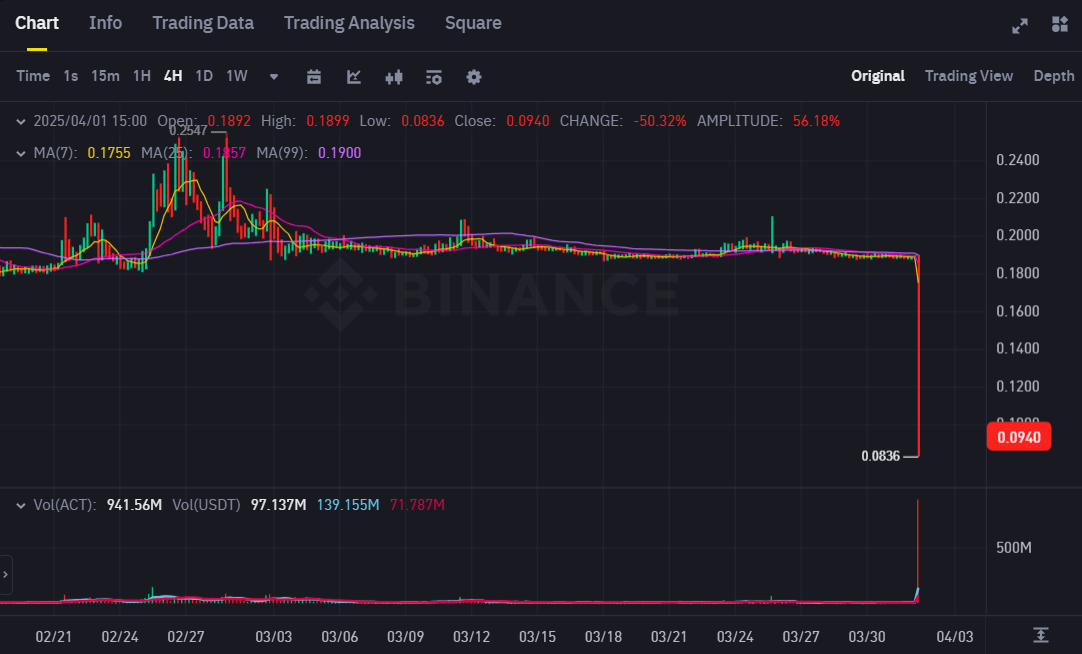
Several altcoins experienced sharp price drops on Binance on Tuesday, with Act I: The AI Prophecy (ACT) plunging 50% from $0.18 to $0.083 within minutes.
DeXe (DEXE) fell 38% to $11, while dForce (DF) declined 19% to $0.06.
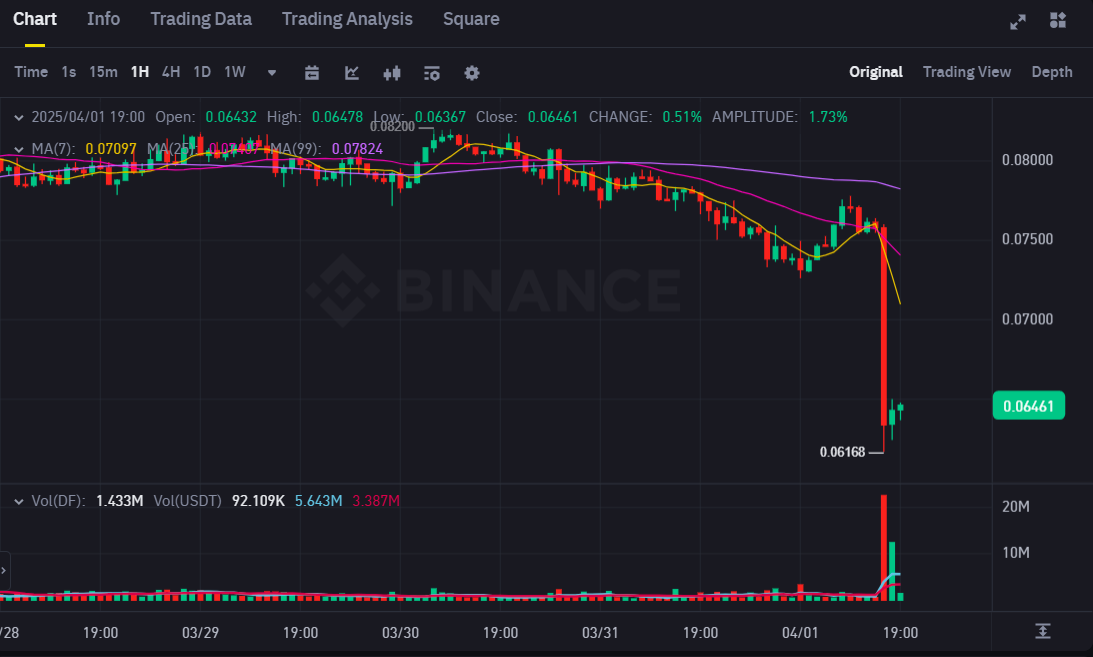
DEXE Chart

Other affected tokens include Bananas For Scale (BANANAS31), LUMIA (LUMIA), QuickSwap (QUICK), and 1000CHEEMS.
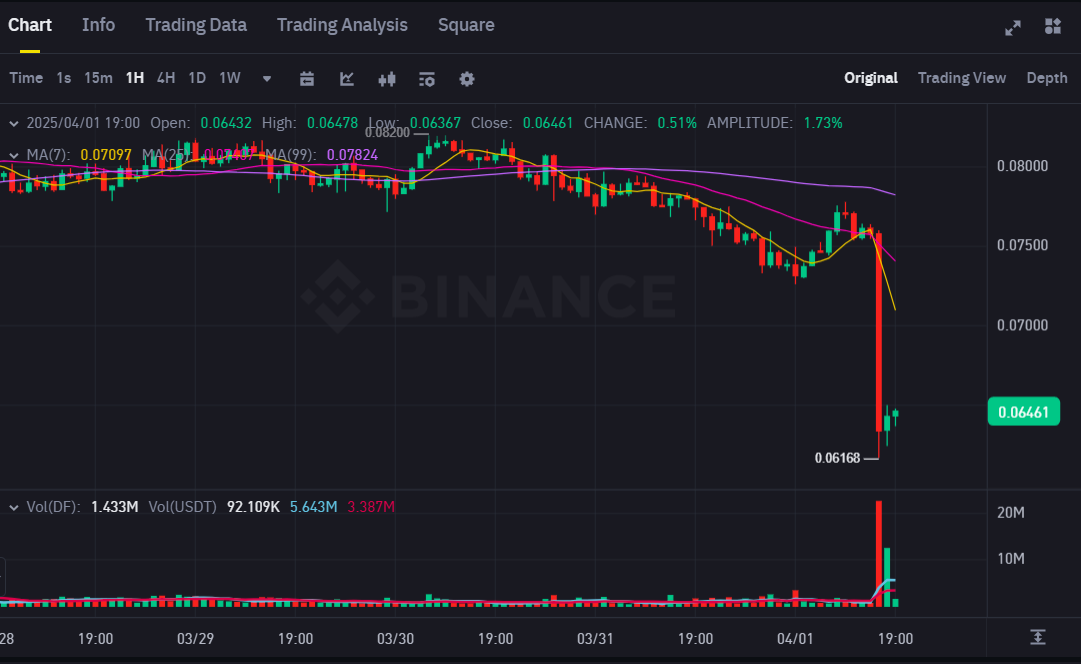
DF Chart

The recent sharp drops in these altcoins are still unexplained. Community speculation has pointed towards Wintermute as a possible factor.

However, Wintermute CEO Evgeny Gaevoy has refuted these claims, adding that he, too, is curious about the cause of the downturn.

Wintermute was recently involved in test transactions related to USD1, a stablecoin launched by World Liberty Financial (WLFI) and backed by the Trump family.

Market observers suggest the drops might be linked to Binance’s recent position limit adjustments.

The changes require traders to maintain higher margin levels for the same position sizes. For instance, positions that previously required $1 million in margin to hold a $5 million position now need additional margin to avoid automatic liquidation.

Some speculate that market makers may have failed to meet the new margin requirements, leading to forced liquidations in low-liquidity markets.

Share this article


US government to finalize Bitcoin stash audit this Saturday

0


Key Takeaways

  • The US government is finalizing a comprehensive audit of its Bitcoin holdings this Saturday.
  • This audit will be the first complete accounting of government-held Bitcoin across federal agencies.

Share this article

The US Department of the Treasury and other federal agencies are anticipated to disclose their holdings of Bitcoin and other crypto assets on April 5, in line with President Trump’s recent directive.

Whether XRP, Solana, and Cardano—the digital assets that the president previously mentioned—will be included in the national digital asset stockpile will also be clarified soon.

On March 6, Trump issued an executive order forming a Strategic Bitcoin Reserve and a Digital Asset Stockpile.

According to a presidential document published on March 11, all federal agencies must report their holdings of Bitcoin and other digital assets to the Treasury Secretary within 30 days of the order.

The Treasury Secretary is also directed to establish two offices to manage government-held digital assets. The Strategic Bitcoin Reserve will hold Bitcoin acquired through criminal or civil forfeiture and will not sell Bitcoin, positioning it as a “digital Fort Knox” for long-term value storage.

David Bailey, CEO of BTC Inc, suggested that the audit results could shed light on Bitcoin’s recent price movements.

Despite the announcement of a strategic Bitcoin reserve, Bitcoin volatility remained high and its price continued to decline, mainly driven by trade war and recession concerns. Since the establishment of the reserve, Bitcoin’s price has fallen approximately 10%, dropping from over $92,000 to $82,000.

“Depending on what we learn, might answer many of the open questions about the recent price action,” said Bailey.

According to data tracked by Arkham Intelligence, the US government currently holds 198,012 BTC worth around $16 billion.

David Sacks, the White House’s crypto czar, said that the government previously held approximately 400,000 Bitcoin through civil and criminal asset forfeitures over the past decade.

However, about half of this amount—195,000 BTC—was sold, generating $366 million in proceeds. If the government had retained all 400,000 BTC, its value today would exceed $17 billion.

Share this article


Coinbase shares sink in steepest drop since FTX turmoil

0


Key Takeaways

  • Coinbase shares fell 31%, marking their steepest drop since the FTX collapse in late 2022.
  • The crypto downturn is driven by macroeconomic concerns, including US trade tensions and recession fears.

Share this article

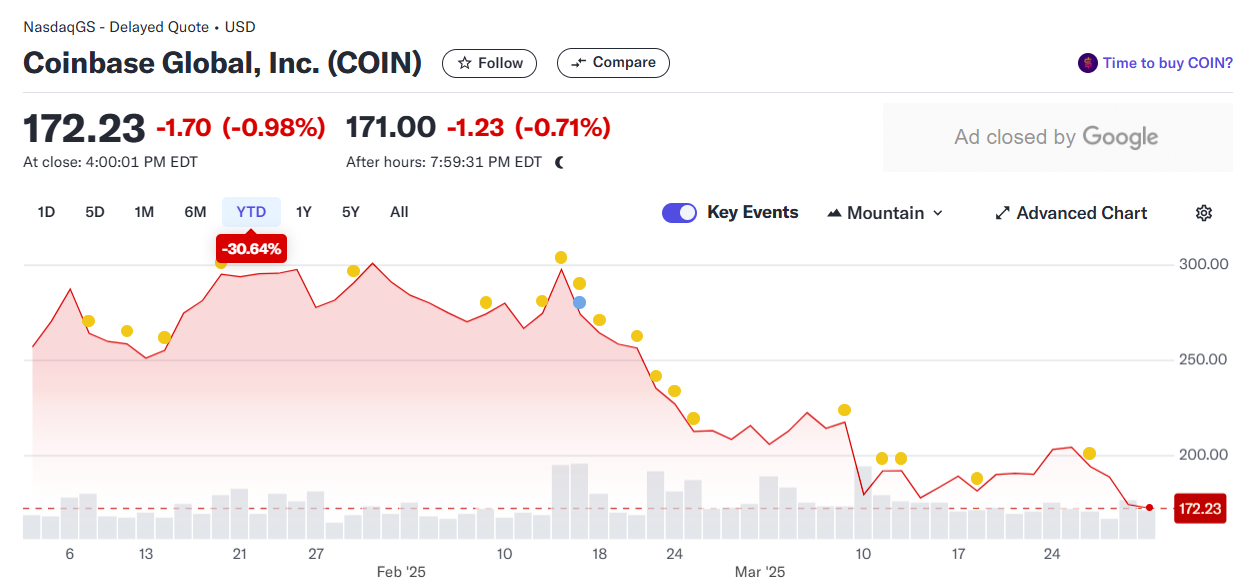
Coinbase (COIN) stock took a hit this quarter, falling by around 31%. It represents its worst performance since the FTX meltdown in late 2022, according to Yahoo Finance data.

The drop mirrors the struggles of Bitcoin, which is set to close one of its weakest quarters with an 11% year-to-date loss, despite a 16% gain over the past year, according to TradingView.

Bitcoin-tied stocks like Coinbase often move in lockstep with Bitcoin’s price, a correlation evident when the leading crypto stumbles.

For Coinbase, exposure to altcoins like Ether—hit harder than Bitcoin—has amplified its losses, given that its revenue is tied to trading volumes across multiple tokens.

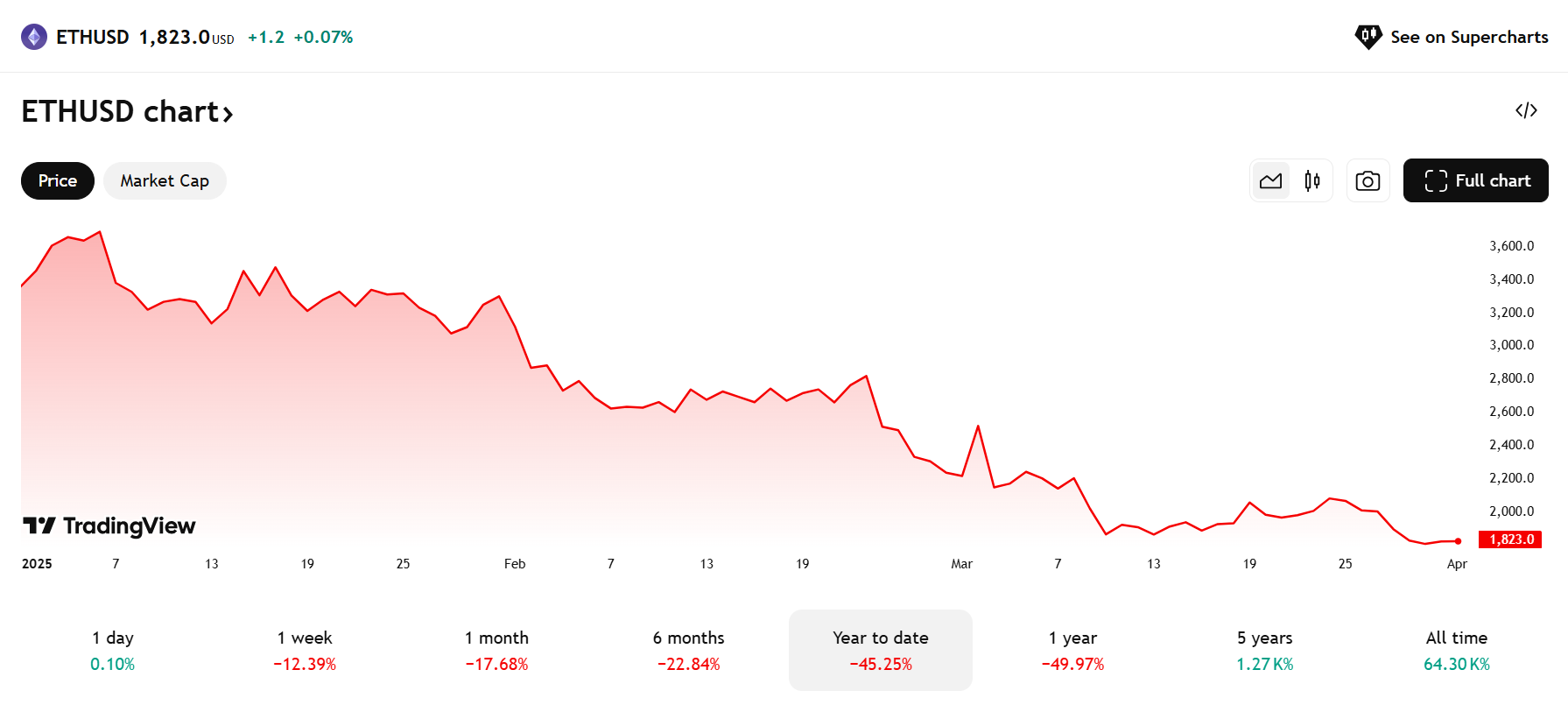
Ether has crashed 45% so far this year, now hovering around $1,800.

The pain extended beyond Coinbase; Bitcoin miners also faced sharp declines this quarter.

MARA Holdings (MARA) shed 31%, Riot Platforms (RIOT) fell over 30%, and Core Scientific (CORZ) plummeted 48%. Meanwhile, CleanSpark (CLSK) lost 27%, while Hut 8 (HUT) slumped 43%.

Strategy (MSTR), heavily invested in Bitcoin, saw a modest dip.

In contrast, Robinhood Markets (HOOD) defied the gloom, soaring nearly 12%.

Analysts warn that worse may be ahead as President Trump’s “Liberation Day” looms on April 2, when aggressive tariffs are set to take effect.

Investor sentiment is still weighed down by macro concerns, despite the crypto industry’s legislative headway in Washington. Tariffs, potential trade wars, and recession fears are driving a retreat from riskier assets.

“Since the US Presidential inauguration, the outlook of Bitcoin has changed from a trusted hedge against inflation to a more risk-on asset with a longer-term high growth prospect,” said Innokenty Isers, Chief Executive Officer at Paybis, in a recent comment.

According to Isers, Bitcoin might not be the preferred inflation hedge for risk-averse investors in the current economic climate.

He suggested that the ongoing trade war and the potential for rising inflation could reduce the amount of money allocated to Bitcoin as a safe-haven asset.

Share this article


Ethereum whales face liquidation risk as ETH prices fluctuate

0


Key Takeaways

  • Two Ethereum whales risk forced liquidations due to declining ETH prices.
  • A combined total of 125,603 ETH on the Maker protocol could be liquidated if price thresholds are breached.

Share this article

Ethereum’s price fluctuations have placed whales on MakerDAO in a vulnerable position, with a combined 125,603 ETH worth around $238 million at risk of liquidation.

Data tracked by blockchain analytics platform Lookonchain shows that one whale, controlling around 64,793 ETH, is close to its liquidation price of $1,787.

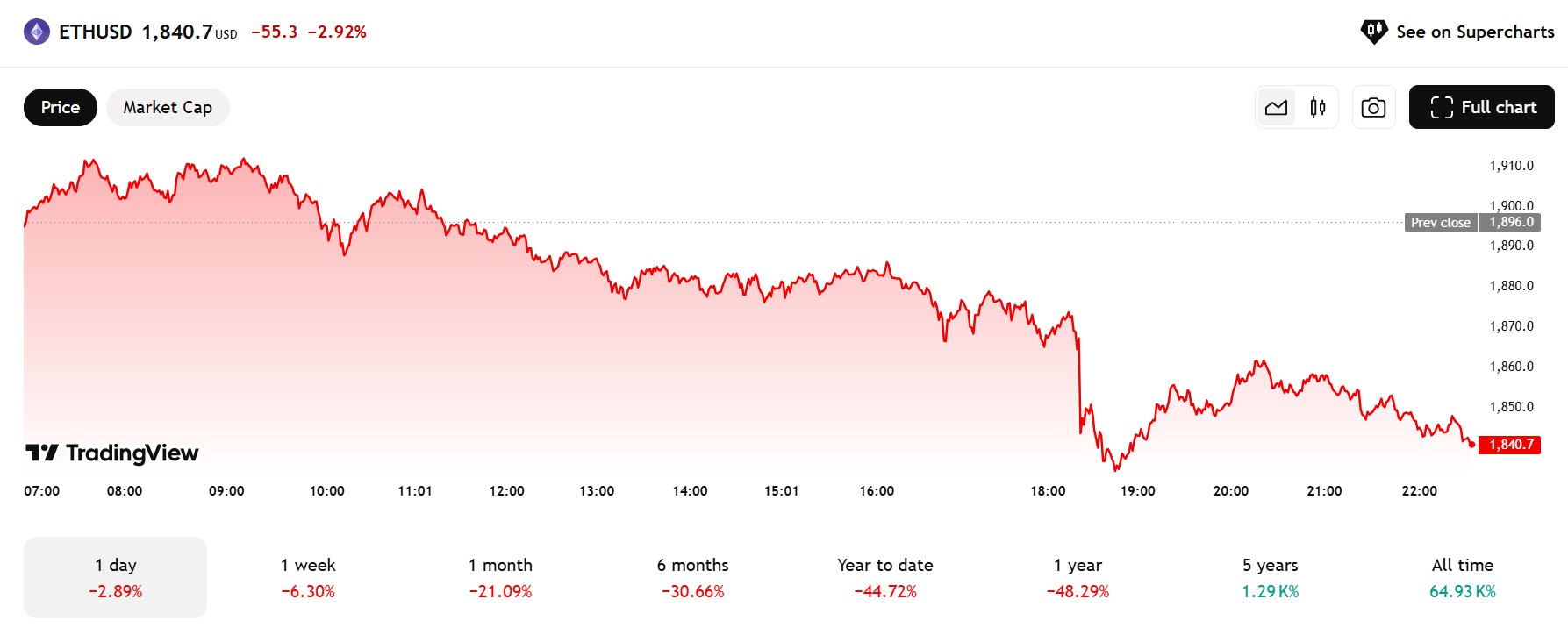
With ETH trading at $1,841 at press time, this whale is only $54 away from its liquidation price.

The trader narrowly avoided liquidation on March 11 by partially repaying their debt after a sharp ETH price drop.

However, the current downturn has put their position back in jeopardy, with the health rate now at 1.04. Continued price decreases could trigger automatic liquidation.

Another whale deposited 60,810 ETH as collateral to borrow 75.69 million DAI, with a liquidation threshold of $1,805. The position faces automatic liquidation if ETH prices fall below this level.

ETH dips below $1,900 amid ETF drag, hacker dump, and market slump

Ethereum has fallen below $1,900, registering a 6% decrease in the past seven days amid market-wide turbulence. Apart from that, a series of negative catalysts have weighed heavily on crypto’s price.

Rising inflation fears and disappointing US economic data have led investors to reduce exposure to risk assets, including crypto assets. President Trump’s announcement of reciprocal tariffs set to take effect on April 2 has further heightened market uncertainty.

Bitcoin briefly dipped below $82,000 in early Saturday trading before recovering slightly to $82,800.

Currently, BTC is trading around $82,400, reflecting a nearly 2% decline over the past week, according to TradingView data. The Bitcoin pullback is also dragging down altcoins, including Ethereum.

On the ETF market, US-listed spot Ethereum funds showed continued sluggish performance.

According to Farside Investors’ data, between March 5 and March 27, investors pulled over $400 million from these funds. The trend reversed yesterday as the ETFs collectively drew in nearly $5.

While the slow uptake has dampened investor enthusiasm, there’s anticipation that the potential enabling of the staking feature could help boost ETF demand. A number of ETF managers are seeking SEC approval to add staking to their existing spot Ethereum ETFs.

Another factor potentially influencing ETH’s price is the sell-off triggered by a hacker dumping a large amount of stolen Ethereum.

According to an early report from Lookonchain, hackers recently offloaded 14,064 Ethereum from THORChain and Chainflip.

Share this article


BlackRock’s Global Allocation Fund boosts IBIT shares by 91%

0


Key Takeaways

  • BlackRock’s Global Allocation Fund increased its holdings in IBIT by 91% to 821,664 shares as of January 31.
  • The BlackRock Strategic Income Opportunities Fund also holds a significant number of IBIT shares, valued at $77 million.

Share this article

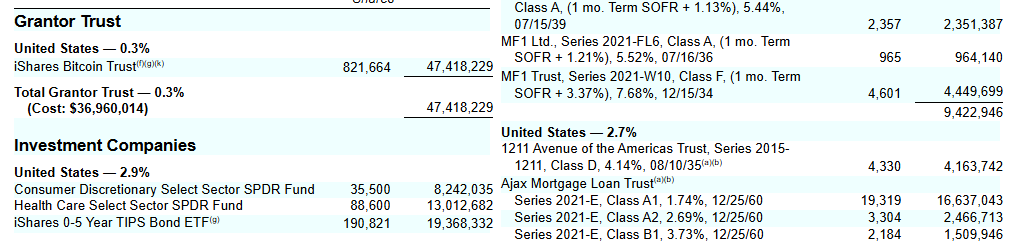
BlackRock’s Global Allocation Fund has increased its holdings in the iShares Bitcoin Trust (IBIT) by 91% to 821,664 shares valued at around $47 million as of January 31, according to a Thursday SEC filing.

The globally diversified investment strategy, designed to maximize total return while managing risk, added 390,894 IBIT units to its portfolio between November 2024 and January 2025.

The fund has steadily expanded its IBIT holdings from 43,000 shares in April 2024 to 198,874 shares in July 2024.

Apart from the Global Allocation Fund, BlackRock previously disclosed holding $78 million in IBIT shares across two investment funds—the Strategic Income Opportunities (BSIIX) and the Strategic Global Bond (MAWIX).

According to the firm’s most recent disclosure, the BSIIX fund owned 2,140,095 IBIT shares worth approximately $77 million, while the MAWIX fund maintained 40,682 shares valued at about $1.4 million, as of September 30.

BlackRock’s Bitcoin Trust has drawn massive investments from hedge funds, pension funds, and institutional investors since its launch.

Mubadala Investment, the Abu Dhabi sovereign wealth fund, reported last month that it had purchased almost $437 million worth of IBIT shares during the first quarter of 2024, representing one of the first significant investments in crypto assets by a major sovereign wealth fund.

The State of Wisconsin Investment Board (SWIB) also doubled down on IBIT, revealing a $321 million investment by the end of 2024.

As of March 25, BlackRock’s Bitcoin fund had around $49,5 billion in assets under management, according to the fund’s official website.

Share this article


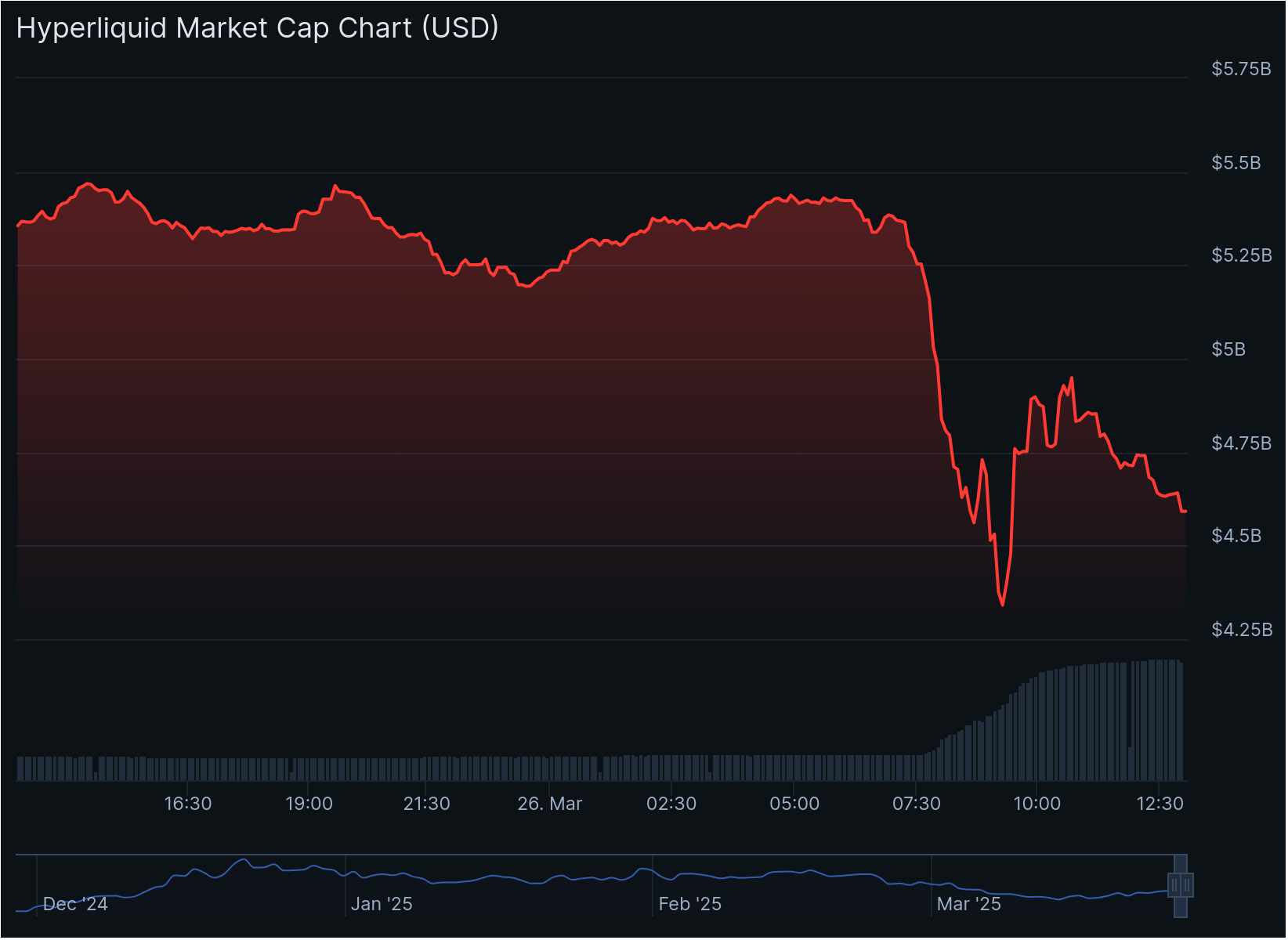
Hyperliquid ditches JELLYJELLY, profits $700K as whale’s gambit backfires

0


Key Takeaways

  • Hyperliquid narrowly avoided a $12 million loss in what appears to be a Jelly-My-Jelly token manipulation scheme.
  • Concerns have been raised about Hyperliquid’s liquidation mechanism and associated risks.

Share this article

Hyperliquid delisted JELLYJELLY after a shadowy whale’s audacious shorting spree sent shockwaves through the exchange, nearly sinking its HLP Vault with a $12 million loss in a matter of minutes.

The situation started earlier today when a trader opened an $8 million short position on JELLYJELLY, a low-cap token valued at around $20 million at the time, according to data tracked by Abhishek Pawa, AP Collective founder. The trader then deliberately removed margin, forcing Hyperliquid’s liquidity vault (HLP) to inherit and auto-liquidate the massive short position.

The trader allegedly bought JELLYJELLY tokens elsewhere, pumping the token’s price on-chain, driving it higher and forcing their own position into liquidation.

The liquidator vault absorbed the remaining short position, which was around $12 million unrealized loss as JELLYJELLY’s price continued to climb. The token’s market cap peaked at around $50 million before delisting.

Taking advantage of the manipulated short squeeze and Hyperliquid’s forced liquidations, a newly created wallet starting with “0x20e8” opened a long position on JELLYJELLY. As the price skyrocketed, the trader swiftly pocketed over $8 million in profits.

At the time, if JELLYJELLY’s price continued to rise and reached a $150 million market cap, Hyperliquid’s liquidator vault faced the risk of full liquidation. Those fears escalated as Binance and OKX announced they would list the token on their futures markets.

Following these announcements, Hyperliquid paused trading of JELLYJELLY. The exchange subsequently confirmed the token’s delisting on X.

Hyperliquid eventually settled 392 million JELLY at $0.0095, earning a $703,000 profit without any losses, according to Lookonchain.

Share this article


Is Hyperliquid the next FTX? JELLY drama triggers Bitget CEO warning

0


Key Takeaways

  • Bitget’s CEO has issued a warning about the potential risks at Hyperliquid after a major incident involving the JELLY token.
  • Hyperliquid faces criticism for its handling of the JELLY incident, with concerns about its operational structure and user safety.

Share this article

Bitget’s CEO, Gracy Chen, warned today about potential risks at crypto trading platform Hyperliquid following controversial handling of the JELLY token incident.

The platform faced turmoil after a trader opened and deliberately self-liquidated a $6 million short position on JellyJelly, forcing Hyperliquid to absorb substantial losses.

The token’s market cap surged from approximately $10 million to over $50 million in under an hour due to the forced squeeze.

The CEO criticized Hyperliquid’s operational structure, stating:

“Despite presenting itself as an innovative decentralized exchange with a bold vision, Hyperliquid operates more like an offshore CEX with no KYC/AML, enabling illicit flows and bad actors.”

The Bitget CEO highlighted structural concerns about Hyperliquid’s platform, including “mixed vaults that expose users to systemic risk, and unrestricted position sizes that open the door to manipulation.”

Binance announced plans to list JELLY perpetual futures amid the controversy, which some users interpreted as a move to target Hyperliquid’s position.

The token has risen 62% in the past 24 hours, while Hyperliquid’s HYPE token has fallen 14.4%, according to CoinGecko data.

Share this article