Friday, February 6, 2026
Home Blog Page 61

Strategy confirms Bitcoin purchases are unaffected by new Nasdaq rules

0


Key Takeaways

  • Strategy’s Bitcoin purchases remain unaffected by new Nasdaq regulations.
  • Nasdaq now requires shareholder approval before companies can issue new shares for crypto purchases.

Share this article

Strategy confirmed today that Nasdaq’s new regulations on digital asset treasury formations will not impact its operations, including ATMs and capital markets activities. This indicates that its Bitcoin accumulation plans remain unaffected.

The stock exchange reportedly introduced requirements mandating companies to obtain shareholder approval before issuing new shares for crypto purchases.

The rules aim to enhance transparency around corporate crypto investment strategies, particularly as more companies add digital assets to their balance sheets.

Companies that fail to comply with these new requirements could face delisting or trading suspensions.

Crypto stocks plummeted following reports of Nasdaq’s heightened scrutiny over stock listings.

Share this article


Bitcoin, altcoins tumble as weak job numbers stoke recession fears

0


Key Takeaways

  • Bitcoin and altcoins dropped after weak US jobs data heightened recession concerns.
  • Markets anticipate a Federal Reserve rate cut in September as economic risks increase.

Share this article

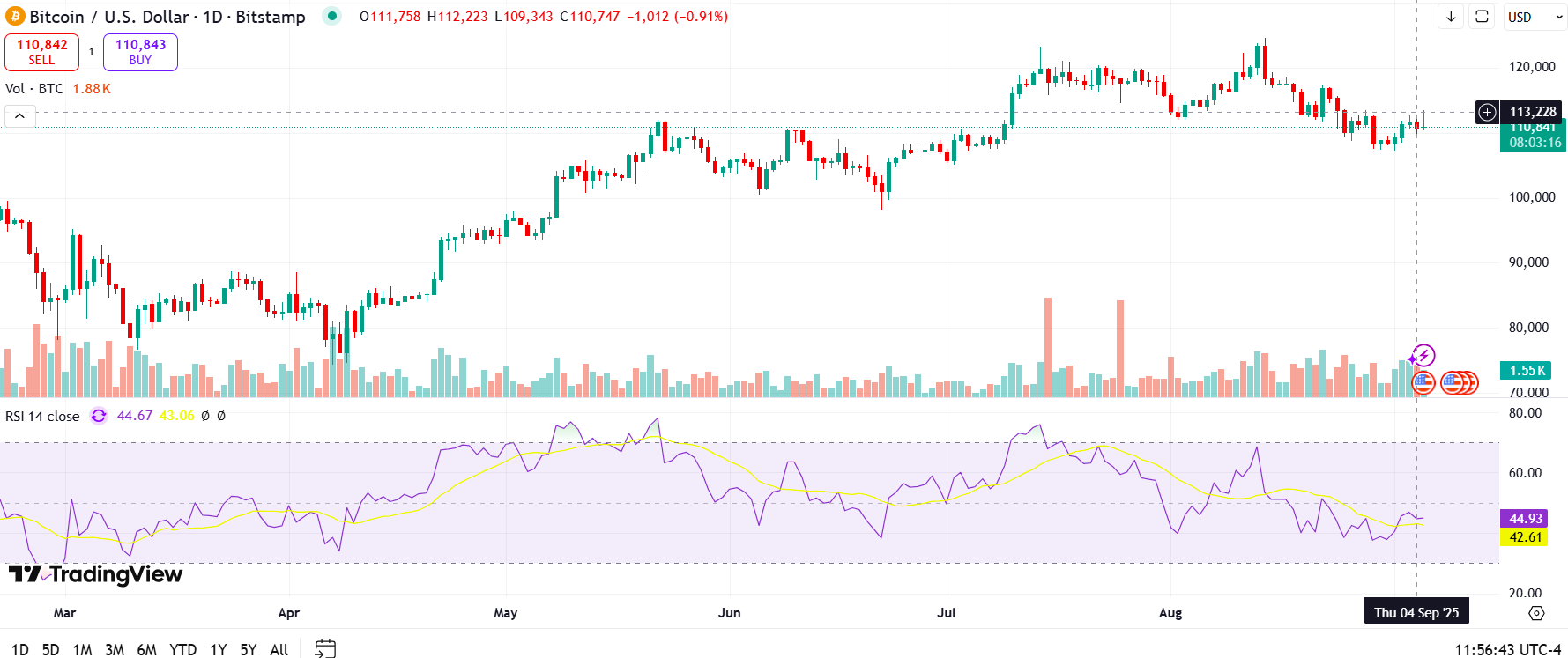
The price of Bitcoin fell below $110,500 on Friday morning as August jobs data came in weaker than expected, which fueled concerns about a looming recession. Altcoins also saw gains erased as market volatility intensified.

The US economy added 22,000 jobs in August, far below expectations and down from 79,000 in July, the Bureau of Labor Statistics reported. The unemployment rate increased to 4.3% from 4.2%, while July’s job gains were revised lower from 73,000.

The sharp deceleration suggests businesses are pulling back on hiring, often an early warning sign of weaker demand and slowing activity.

The three-month average has dropped sharply, showing a consistent cooling trend in the labor market that can spill into consumer spending and overall growth, raising the risk of recession.

Gold hit a record $3,580 on the weak jobs data, while Bitcoin dipped to $112,500 before rebounding above $113,300, TradingView showed.

The Dow, S&P 500, and Nasdaq also touched fresh highs, but crypto and equities quickly pulled back even as markets fully priced in a September Fed rate cut.

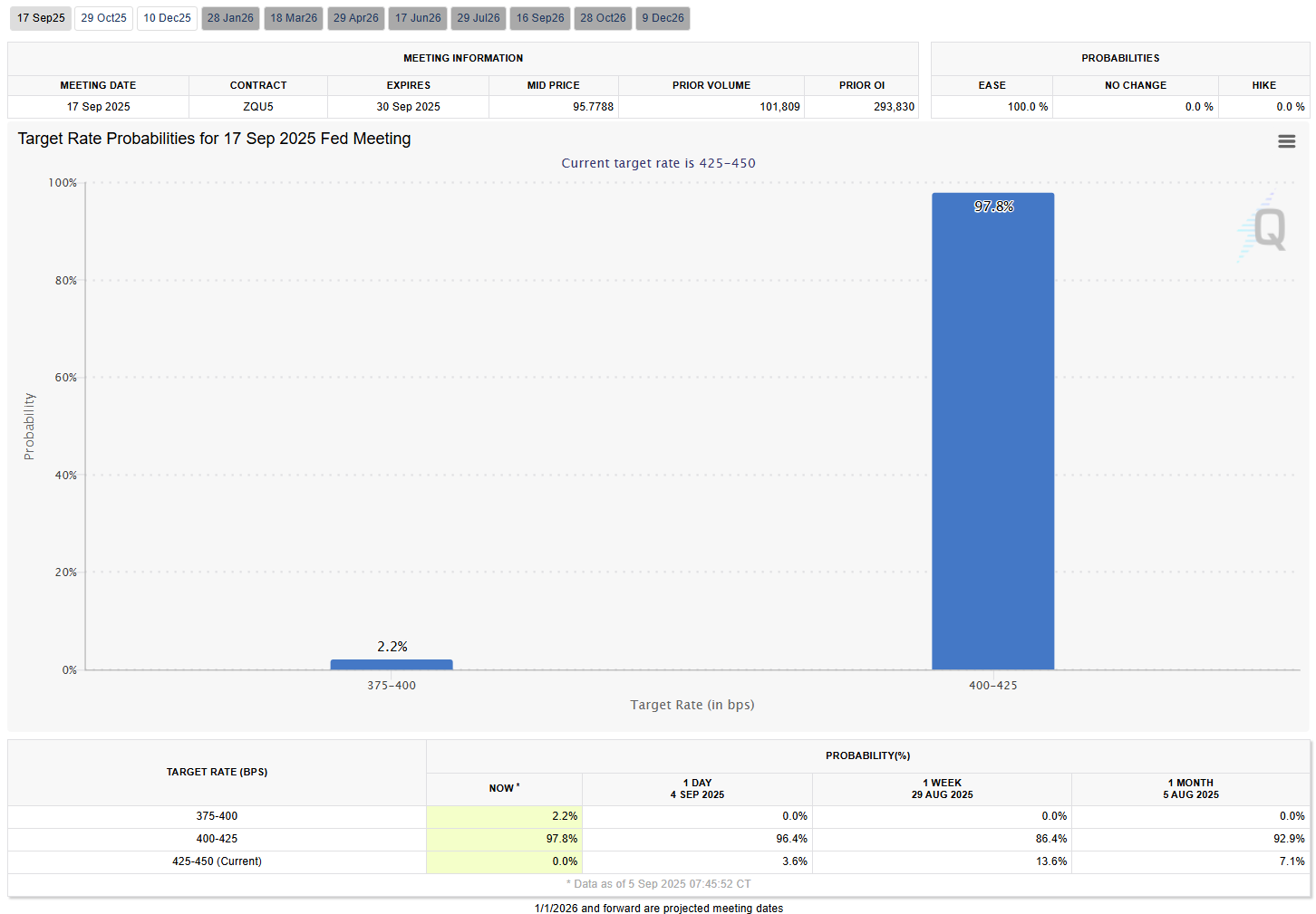
Traders now see a 98% chance the Fed delivers a quarter-point cut at its Sept. 16–17 meeting, with 2% odds on a half-point move, according to FedWatch Tool data.

In his most recent statements at the Fed’s Jackson Hole event, Fed Chair Jerome Powell signaled that the central bank kept the door open for a September rate cut.

However, he also indicated it would not signal the start of an aggressive easing cycle.

Powell noted that inflation risks remain tilted to the upside while employment risks are leaning lower. With policy rates now closer to neutral but still restrictive, he said the Fed can proceed carefully, while leaving room for adjustments if risks shift further.

Markets are now looking ahead to the August Consumer Price Index (CPI) data, set for release on September 11, to gauge whether Fed rate cuts are on the horizon.

September has historically been a volatile month for crypto and stocks.

Last year, Bitcoin fell below $55,000 before surging after a 50-basis-point Fed cut. The rate move came amid rising unemployment, weak job growth, and recession fears.

Share this article


Crypto stocks plunge on new Nasdaq rules as Bitcoin slips under $110K

0


Key Takeaways

  • Nasdaq now requires shareholder approval for firms issuing stock to buy crypto, with non-compliant companies facing suspension or delisting.
  • Strategy, BitMine, SharpLink, and Ethzilla stocks fell alongside Bitcoin’s drop below $110,000, dragging the broader crypto market lower.

Share this article

Crypto-linked stocks fell Thursday after Nasdaq introduced new rules requiring some companies to obtain shareholder approval before issuing new shares to fund crypto purchases.

Nasdaq said the change is aimed at preserving market integrity as companies raise large sums through complex structures to purchase crypto assets. Firms that fail to comply risk suspension or delisting.

Crypto-related equities and tokens sold off after Nasdaq announced the new shareholder approval rules. Strategy fell as much as 3.5% before paring losses to 2% by midday, while BitMine Immersion dropped nearly 9%, SharpLink Gaming tumbled 11%, and Ethzilla plunged 15% intraday before recovering to trade down 9%.

Bitcoin slipped 2.5% to $109,500, falling below the $110,000 key level, with Ether down more than 3% at $4,300 and Solana just above $204, off 3.5%. The broader crypto market shed 2.2% over the past 24 hours, with total capitalization declining to $3.8 trillion, according to CoinGecko.

Share this article


El Salvador acquires $50M in gold for the first time since 1990 as Bitcoin bet continues

0


Key Takeaways

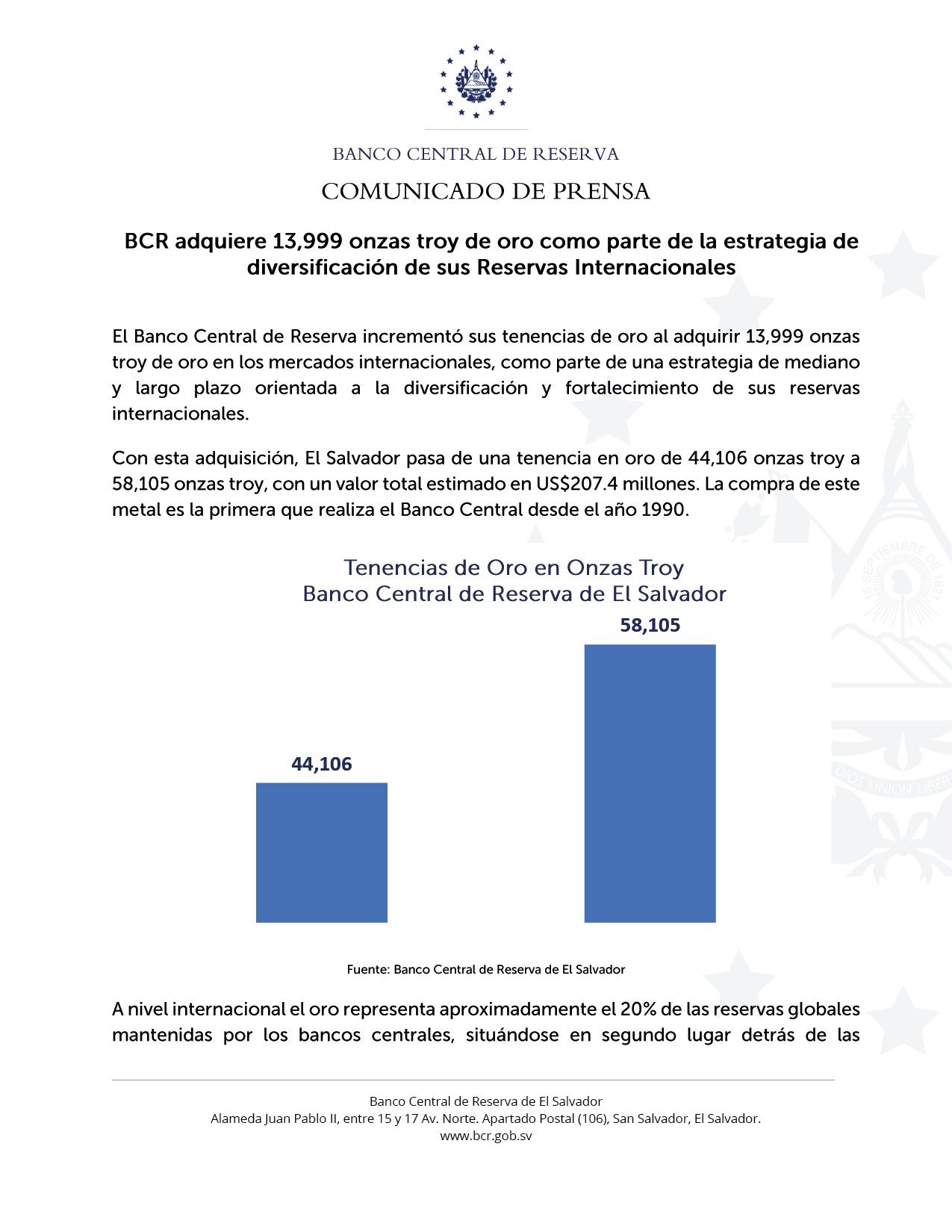
  • The Central Reserve Bank of El Salvador has increased its total gold holdings to 58,105 troy ounces from 44,106 troy ounces.
  • Gold and silver prices recently reached record highs amid economic and political volatility.

Share this article

El Salvador’s Central Reserve Bank (BCR) announced on Thursday that it had acquired 13,999 troy ounces of gold, worth approximately $50 million, for the first time since 1990. The acquisition brings its total gold stash to 58,105 troy ounces, with an estimated value of $207 million.

Gold represents about 20% of global reserves held by central banks around the world, second only to dollar-denominated reserves. Global central banks have purchased more than a thousand tons of gold annually over the past three years, according to the central bank.

The bank stated that the move was part of its strategy to diversify its global portfolio. It followed gold’s recent rally to record levels above $3,500 per ounce.

The price movement comes as markets anticipate potential interest rate cuts by the US Federal Reserve, which is scheduled to meet on September 16 and 17.

“For the Central Reserve Bank of El Salvador, this acquisition represents a long-term positioning, based on a prudent balance in the composition of the assets that make up the country’s international reserves,” the BCR said in a translated statement.

“This operation reflects the commitment to strengthen the nation’s patrimony and ensures that the country maintains diversified, secure, and long-term reserves,” the bank added.

Alongside gold, El Salvador continues to expand its Bitcoin reserves. The government recently moved its national holdings into multiple new wallets to reduce vulnerability to potential quantum-computing threats.

Managed by the National Bitcoin Office, the system uses 14 addresses, each capable of holding up to 500 BTC.

Share this article


World Liberty blacklists Justin Sun’s address, freezing $3B in WLFI tokens

0


Key Takeaways

  • World Liberty Financial blacklisted an address tied to Justin Sun, freezing 540M unlocked and 2.4B locked WLFI tokens.
  • The move followed transfers of 60M WLFI worth $9M to exchanges, sparking concerns over token selling.

Share this article

World Liberty Financial (WLFI) has blacklisted an address linked to Justin Sun, freezing about 540 million unlocked tokens and 2.4 billion locked, according to Zoomer News post on X.

The move was likely triggered by transfers of 60 million WLFI tokens, worth roughly $9 million at the time, sent to exchanges, according to on-chain analytics platform Arkham.

The WLFI governance token, launched September 1 with Donald Trump’s endorsement, unlocked 20% of its 100 billion supply at its TGE. Justin Sun, founder of Tron, claimed 600 million WLFI worth about $200 million at launch, accounting for 3% of the unlocked pool and making him one of the project’s largest stakeholders.

In response to concerns that his tokens were being sold, Sun denied involvement, stating his address only conducted “a few small deposit tests” and splitting, with “no buying or selling involved” and no market impact. Despite those assurances, World Liberty invoked its blacklist function, freezing Sun’s WLFI holdings, according to on-chain data.

Sun publicly committed on launch day to holding his WLFI. He said Monday he has “no plans to sell our unlocked tokens anytime soon,” citing the project’s “long-term vision” and alignment with its mission.

WLFI traded at $0.18, down 17% on the day and more than 40% below its $0.30 launch price, according to CoinGecko data.

Share this article


The Aleo Network Foundation and Req

0


San Francisco, California, September 4th, 2025, Chainwire

Aleo’s privacy-first infrastructure will enable secure, private, and compliant payroll for Web2 and Web3 enterprises

The Aleo Network Foundation, the non-profit corporation that oversees the health of the ALEO Network, a privacy and compliance infrastructure that powers secure, programmable, worldwide payments, today announces a partnership with Request Finance, the crypto payroll platform with over $1B in transactions and trusted by leading accounting firms, including the likes of Deloitte and PwC. Together, they will provide Web2 and Web3 companies with access to borderless, decentralized crypto rails while upholding fintech-grade privacy.

The integration of Aleo’s privacy-first infrastructure allows Request Finance users the ability to continue executing fast, low cost transfers that hide personal information and transaction details and introduce a new layer of security to the blockchain. Users no longer have to choose between compromised security from fully transparent transactions or slow and expensive fiat rails. The addition of Aleo to Request Finance’s platform signals a shift in blockchain users’ appetite to experience added privacy and selective disclosure, while still enjoying the borderless benefits of blockchain.

In the crypto payroll context, this partnership allows companies to automate employee payments while protecting sensitive financial data and meeting compliance requirements. It addresses a critical gap in the market: a payment system that combines the transparency of blockchain with the privacy needed to shield wage-related information. Primary beneficiaries include:

  • Web2 companies paying contractors or suppliers overseas, who want to bypass costly and slow fiat rails.
  • Web3-native teams that keep most of their assets on-chain. With up to 90% of treasury funds held in crypto, a single exposed transaction can reveal significant financial details—making privacy-preserving payments essential.

After successfully piloting Aleo’s technology to facilitate private payments, a full integration rollout is now in place, expanding Aleo’s privacy-first capabilities to all teams using Request Finance’s platform.

“At Aleo, we believe privacy isn’t just a feature: it’s a requirement for bridging traditional finance and blockchain technology,” said Howard Wu, co-founder of Aleo. Thanks to our partnership with Request Finance, companies can now pay with cryptocurrency without sacrificing the privacy standards they’ve come to expect from traditional banking.”

“Aleo tackles one of the biggest challenges for businesses adopting stablecoins in their finance stack: maintaining privacy on-chain,” said Max Franke, Head of Product of Request Finance. “By integrating Aleo’s technology into Request, businesses can now handle sensitive payments, from payroll to vendor bills, with the confidence that transaction details remain private. This combination gives businesses the security and discretion they require, while keeping the process simple, familiar, and easy to use.”

Through this partnership, Request Finance has already processed $3.7M USD worth of ALEO token in just a few weeks post-integration. Request Finance has enabled Web3-native companies, as well as mainstream enterprises, to tap into on-chain payroll that mimics private payment rails with the speed and efficiency synonymous with blockchain.

About The Aleo Network

The Aleo Network is building the infrastructure for the next generation of private, decentralized applications. Using zero-knowledge cryptography, Aleo enables scalable, off-chain execution with on-chain verification — delivering privacy without compromising programmability. Developers can build powerful, secure applications without exposing user data.

As the industry continues to push toward more secure and privacy-first solutions, Aleo remains committed to making privacy a native, accessible feature for all builders on the decentralized web. For more information about Aleo and to stay updated on its latest developments, visit www.aleo.org.

About Request Finance

Request Finance is the ultimate finance platform for stablecoins, crypto, and fiat operations, powering Accounts Payable, Accounts Receivable, Accounting, Payroll, Expenses, and flexible payments for enterprises. It has processed over $1 billion in transactions, proving that demand for secure, compliant finance solutions is stronger than ever.

Contact

Aleo
[email protected]


Fed to host October conference on stablecoins, DeFi, AI, and tokenization

0


Key Takeaways

  • The Federal Reserve is hosting a conference in October to discuss stablecoins, DeFi, AI, and tokenization in payments.
  • Panel discussions will focus on the convergence of traditional and decentralized finance, as well as emerging technologies impacting payment systems.

Share this article

The Federal Reserve Board will host a conference focused on payments innovation on Tuesday, October 21, exploring topics including stablecoins, decentralized finance, artificial intelligence, and tokenization, according to a Wednesday press release.

“Innovation has been a constant in payments to meet the changing needs of consumers and businesses. I look forward to examining the opportunities and challenges of new technologies,” said Governor Christopher Waller.

According to Waller, the event will serve as a forum to evaluate emerging technologies, share ideas for improving payments infrastructure, and hear from those driving innovation in the sector.

The announcement follows Waller’s remarks last month about the central bank’s interest in studying tokenization, smart contracts, and artificial intelligence to enhance payment systems.

Speaking at the 2025 Wyoming Blockchain Symposium, Waller said these technologies could streamline payment operations and strengthen private sector collaboration. He also pointed to the potential of stablecoins under the GENIUS Act and the use of AI for fraud detection and trend analysis.

The upcoming conference will include panel discussions examining the convergence of traditional and decentralized finance, emerging stablecoin use cases and business models, AI applications in payments, and the tokenization of financial products and services.

Share this article