Saturday, March 21, 2026
Home Blog Page 106

Litecoin’s X account hacked to promote fake Solana LTC token

0


Key Takeaways

  • Litecoin’s X account was hacked to promote a fake Solana-based token with the same LTC ticker.
  • Hackers are increasingly using targeted phishing emails disguised as X team communications to steal user credentials.

Share this article

The official X account of Litecoin appeared to have been compromised earlier today, according to numerous reports from crypto community members. The hacker used it to promote a fraudulent Solana-based token sharing the same LTC ticker as the legitimate digital asset.

The unauthorized post, which included a Solana contract address for the fake Litecoin token, briefly drove the scam token’s market capitalization to $27,000 before it plunged to $3,400, per DEX Screener. The tweet was subsequently removed.
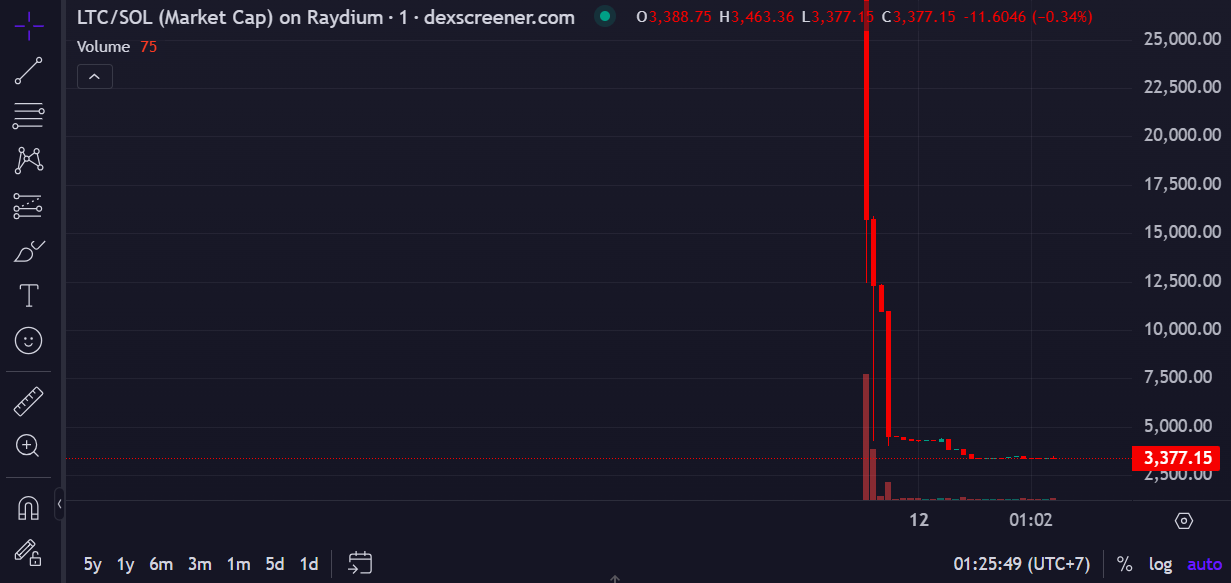
“Be cautious [about] any tweets coming from this account until the team confirms they have regained full access to the account,” warned a user.

In a recent statement, Litecoin confirmed that its account was hacked and investigations are still underway. The team reported having found and removed a delegated account that was targeted by the hacker.

The incident follows a pattern of social media account compromises targeting high-profile crypto projects and individuals. In December, similar attacks hit the Cardano Foundation’s X account, which was used to spread false information about a nonexistent SEC lawsuit and promote a fraudulent Solana-related token.

Blockchain investigator ZachXBT reported that between late November and December, a single threat actor accumulated approximately $500,000 through meme coin scams launched via more than 15 compromised X accounts, including Kick, Cursor, Alex Blania, The Arena, and Brett.

The investigator also identified a common attack vector where hackers send phishing emails disguised as X team communications about copyright infringement, attempting to trick users into visiting fraudulent sites to reset their two-factor authentication and passwords.

Share this article


Bitcoin rally faces headwinds from Trump’s diverging crypto trades, say experts

0


Key Takeaways

  • Bitcoin experienced its worst weekly performance due to a strong dollar and Trump’s potential tariff plans.
  • Despite short-term challenges, long-term structural tailwinds for Bitcoin and digital assets remain intact.

Share this article

Bitcoin’s rise of over 45% in the aftermath of the November 5 presidential election had already lost steam. Analysts anticipate more turbulence ahead as President-elect Donald Trump’s proposed tariff plans and robust employment figures drive bond yields higher, strengthening the dollar and putting pressure on digital assets.

“Bitcoin’s problem at the moment is the strong dollar,” Zach Pandl, head of research at Grayscale Investments, told CNBC, noting that the Fed’s recent signal helped in part strengthen the dollar.

Bitcoin was off to a strong start this week, reclaiming $102,000 on Monday, CoinGecko data shows. However, the rally was short-lived; the flagship crypto asset dropped below $97,000 the next day and extended its slide toward the end of the week.

“I would attribute the drawdown in the last two days largely to the market starting to appreciate that not every aspect of the Trump policy agenda is going to be positive for Bitcoin,” Pandl addressed the recent decline, adding that Trump’s proposed tariff plans introduce uncertainty into the market.

Trump is considering declaring a national economic emergency to facilitate his plans for implementing universal tariffs, CNN reported Wednesday. This, coupled with related economic policies, could create a range of inflationary pressures. Yet, no final decision has been made regarding this declaration as of now.

While there was initial optimism regarding a pro-crypto environment under Trump’s administration, conflicting signals about the extent of tariffs could create volatility and negatively impact risk assets like Bitcoin.

Continued high interest rates

Stronger-than-expected payroll numbers in December 2024 indicate that there may be less urgency for the Fed to lower rates to stimulate the economy. Following the report, investors have lowered their expectations for near-term interest rate cuts.

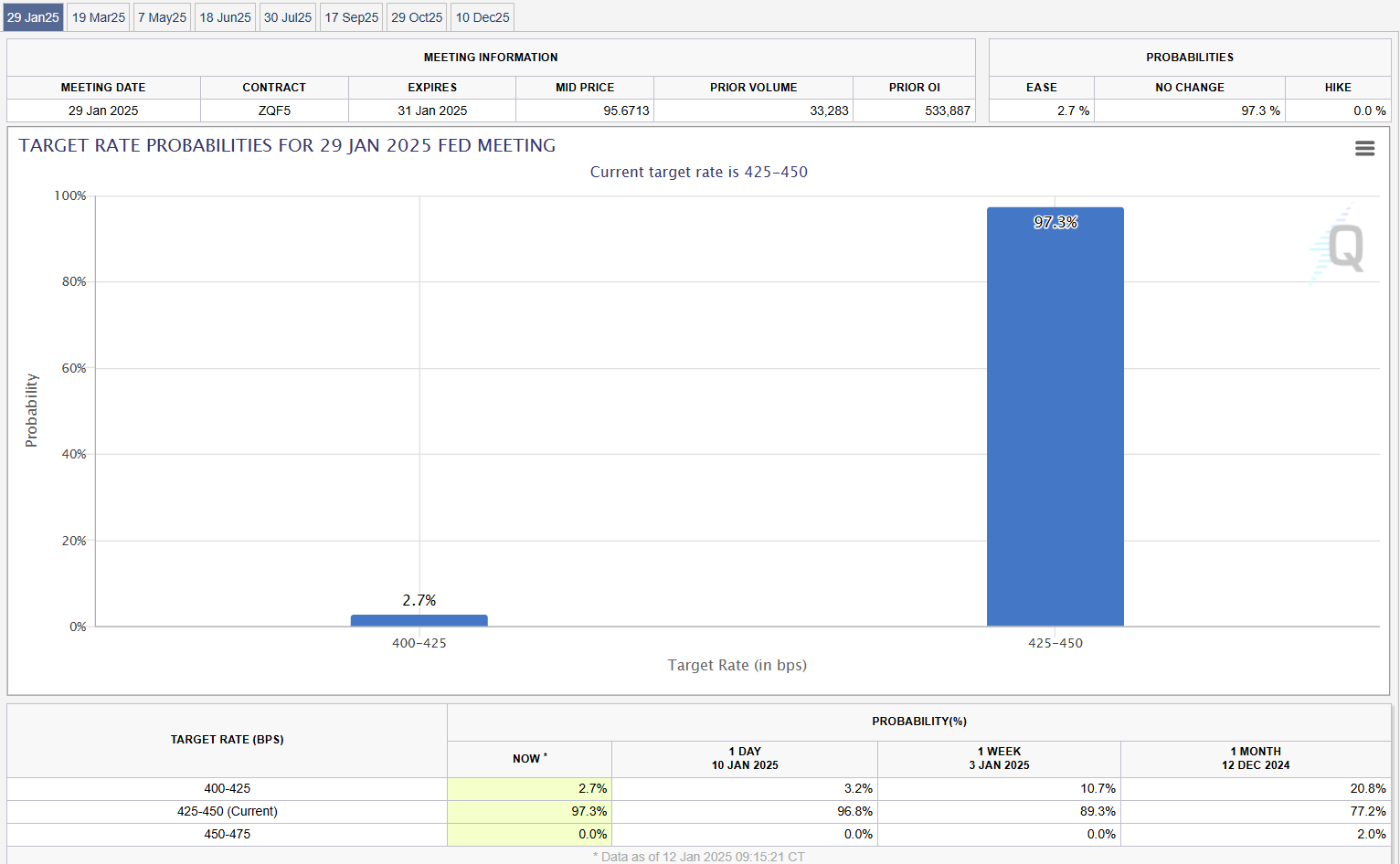
As of the latest data from the CME FedWatch Tool, market participants are leaning toward the probability that the Fed will keep interest rates unchanged during its upcoming meeting on January 28-29, with a likelihood of 97%.

The Fed cut rates by 25 basis points last month, but it also delivered a hawkish message showing a cautious approach moving forward. The central bank projected only two rate cuts this year, down from previous projections of more reductions due to ongoing inflationary pressures and economic conditions.

With a cautious Fed and uncertainties surrounding Trump’s economic agenda, “it’s possible risk assets will face choppiness over the near term, despite long-term structural tailwinds for Bitcoin and digital assets remaining intact,” according to Alex Thorn, head of research at Galaxy Digital.

Pro-crypto legislation may take some time

Potential positive impacts from pro-crypto legislation may not materialize quickly as Congress is expected to prioritize non-crypto issues over the next three months, according to JPMorgan analyst Kenneth Worthington.

Yet, Worthington is confident that Congress will eventually shift its attention back to digital assets and take up important crypto-related legislation, like potential frameworks for stablecoins and market structure.

The New York Digital Investment Group (NYDIG) has the same viewpoint.

In a recent report, NYDIG’s research head Greg Cipolaro suggests that immediate changes to crypto policy are unlikely. He points to various governmental processes, such as official appointments and confirmations, that could delay the implementation of new policies.

The analyst also notes that other legislative priorities may take precedence, further delaying crypto-specific initiatives despite a generally positive outlook for digital assets from Trump’s prospective appointments.

Share this article


Fed’s Waller signals multiple rate cuts in 2025 as Bitcoin holds steady near $100K

0


Key Takeaways

  • Federal Reserve Governor Waller hinted at multiple interest rate cuts in 2025 due to promising inflation data.
  • Bitcoin surged above $99K following better-than-expected inflation figures, with traders eyeing a breakout past $100K and altcoins rallying strongly.

Share this article

Federal Reserve Governor Christopher Waller hinted at multiple rate cuts in 2025 if inflation continues its current disinflationary trend.

Speaking on CNBC Thursday, Waller said, “The inflation data we got yesterday was very good,” referencing the latest figures showing a cooldown in price pressures.

He added that if similar inflation data continues to be reported, it would be reasonable to expect rate cuts in the first half of the year, with the possibility of a cut as early as March.

Waller also suggested that future cuts could exceed current market expectations if inflation falls in line with December’s favorable data.

The two-year Treasury yield, which closely reflects Federal Reserve policy changes, dropped to 4.25% after Waller’s comments. Markets are now expecting 40 basis points of rate cuts in 2025, up from 34 basis points earlier.

Waller cautioned that the pace of cuts remains data-dependent. “If the data doesn’t cooperate, then you’re going to be back to two, maybe even one [cut] if we just get a lot of sticky inflation,” he said.

The labor market continues to influence the Fed’s outlook, with recent data showing steady job growth and lower unemployment at the end of 2024. Waller characterized the labor market as “solid, not booming.”

Bitcoin responded positively to Wednesday’s CPI release, aligning with Waller’s optimistic inflation outlook.

The asset briefly surpassed the $100,000 resistance level and has been trading between $98,000 and $100,000 over the past 48 hours, with Bitcoin still struggling to break and hold above the $100,000 mark.

This level, a psychological barrier since Bitcoin first reached it in early December, had proven difficult to sustain. Earlier this week, Bitcoin fell below $90,000, but the better-than-expected inflation data reignited bullish sentiment, driving the price upward once again.

Bitcoin’s market dominance has decreased to 57% since Monday. Alternative digital assets have posted gains, with Solana rising 8% and XRP increasing 15% over the past 24 hours.

Meanwhile, the DXY remains on a downward trend but is still higher than levels from a month before Donald Trump’s election victory.

Many expect the DXY to drop once Trump takes office, as was observed during his first term after the 2016 election, when it initially rose before declining in 2017.

Share this article


Litecoin seen as commodity, Litecoin ETF likely first to debut under Trump, says expert

0


Key Takeaways

  • Canary Capital’s Litecoin ETF might be the first spot crypto ETF approved by the SEC in 2025.
  • The CFTC classifies Litecoin as a commodity, differentiating it from other digital assets facing regulatory challenges.

Share this article

Canary Capital’s Litecoin ETF is well-positioned to become the first spot crypto ETF approved by the SEC under the incoming Trump administration, given Litecoin’s commodity status, according to Bloomberg ETF analyst Eric Balchunas.

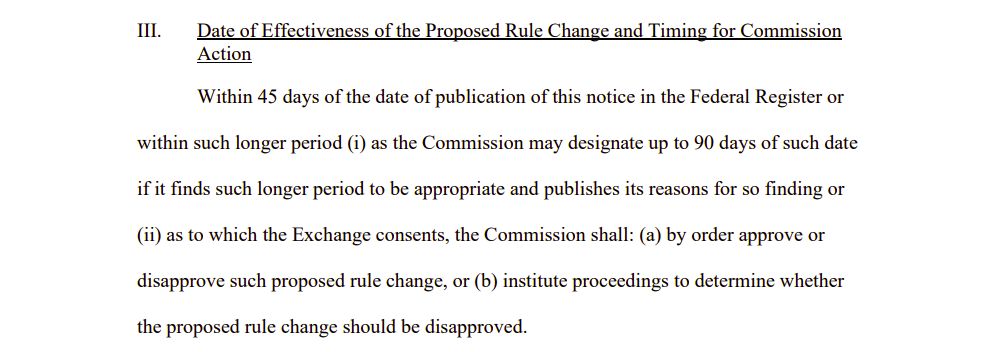
Following Canary Capital’s amended S-1 filing yesterday, Nasdaq submitted a 19b-4 form to the SEC on Thursday, formally beginning the review process for the Canary Litecoin ETF. The SEC now has 45 days from Federal Register publication to approve or deny the listing, with a possible 45-day extension.

Nasdaq's 19b-4 form
Nasdaq’s 19b-4 form

According to Balchunas, the Litecoin ETF application has met all the necessary requirements and conditions for approval.

“Litecoin ETF now has all the boxes checked. The first alt coin ETF of 2025 is about to be on the clock. I don’t see any reason why this would be withdrawn either given SEC gave comments on the S-1, Litecoin is seen as commodity and there’s new SEC sheriff in town,” Balchunas wrote on X on Thursday.

Balchunas stated Wednesday that the SEC had provided feedback on Canary Capital’s S-1 filing for their proposed Litecoin ETF. This prompted the firm to submit the amendment.

James Seyffart, Balchunas’ fellow Bloomberg ETF analyst, noted that “A 19b-4 would actually start the potential approval/denial clock.”

Canary Capital filed its Litecoin ETF S-1 statement with the SEC in October 2023. The amended filing names US Bancorp Fund Services as the ETF administrator, with Coinbase Custody Trust and BitGo serving as custodians for the ETF’s Litecoin holdings.

CFTC classifies Litecoin as a commodity

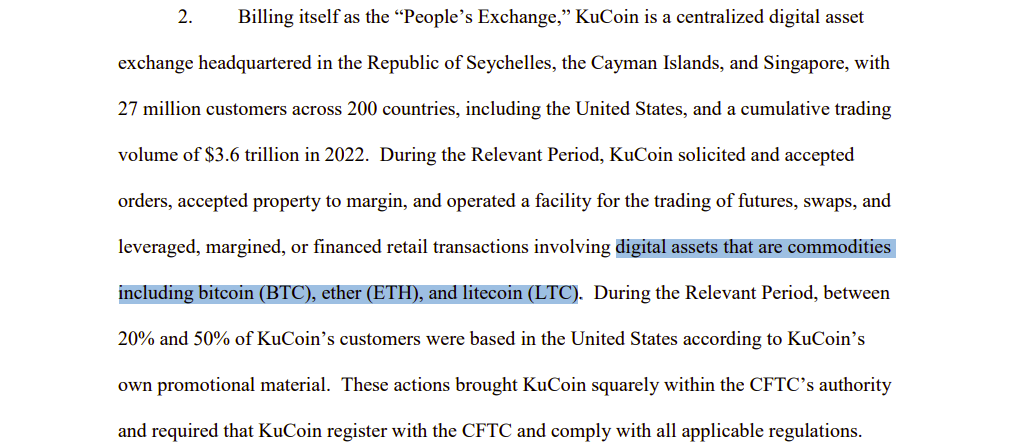
The CFTC labeled Litecoin as a commodity in its lawsuit against crypto exchange KuCoin, thereby exempting it from the SEC’s securities regulations.

CFTC called Litecoin a commodity in a filing in March 2024

The SEC has not taken any official action or made any public pronouncements that definitively categorize Litecoin as either a security or not a security.

Unlike Litecoin, Ripple and Solana have faced explicit SEC scrutiny. Ripple continues to be engaged in ongoing litigation with the SEC, which maintains that its native token, XRP, constitutes a security.

The SEC has also classified Solana’s SOL token as a security in separate cases against Binance and Coinbase. These legal disputes remain unresolved.

Share this article


Russian power grid titan eyes Bitcoin mining ventures

0


Key Takeaways

  • Rosseti Group is exploring cryptocurrency mining opportunities at underutilized power centers.
  • The company aims to coordinate mining infrastructure deployment and increase revenue and tax payments.

Share this article

Rosseti, Russia’s largest power grid operator, is exploring crypto mining operations at its underutilized power centers and aims to become a coordinator for mining infrastructure deployment across the country, according to state news agency TASS.

“The Rosseti Group is the largest grid company in Russia and can act as an operator for coordinating the placement of mining infrastructure,” the company told TASS.

The state-owned energy provider sees crypto mining as an opportunity to utilize spare capacity at low-load power centers, which could increase both the company’s tariff revenue and tax payments while contributing to economic development.

The grid operator confirmed its technical readiness for mining operations, noting that its infrastructure is equipped with the necessary switching equipment to manage mining facility loads. The company also maintains operational data on available capacity and consumption patterns to ensure reliable regional power supply.

Rosseti is currently discussing various aspects of its mining development strategy, including the potential introduction of a separate tariff structure for miners as a demand management tool.

Last August, President Vladimir Putin signed a law regulating crypto mining as part of the country’s digital asset management strategy. Under the law, only registered entities and individual entrepreneurs are allowed to engage in large-scale crypto mining operations in Russia.

Due to power shortages, the Russian government has banned crypto mining in several regions starting January 1, 2025, extending through March 15, 2031.

Share this article


Wintermute forecasts stablecoins driving deeper integration with Tradfi in 2025

0


Key Takeaways

  • Wintermute predicts stablecoins will become deeply integrated with traditional finance in 2025.
  • The firm’s 2024 review and 2025 outlook highlight stablecoins’ efficiency and global reach as catalysts for adoption.

Share this article

Crypto trading firm Wintermute expects stablecoins to become deeply integrated with traditional finance in 2025.

This integration will be driven by the growing adoption of exchange-traded funds (ETFs) and increased corporate holdings of digital assets, according to Wintermute’s recently released annual review and outlook report.

The firm predicts a major corporate acquisition or merger will be settled entirely in stablecoins this year, marking a significant convergence between crypto and traditional financial systems.

The forecast comes as institutions increasingly recognize the advantages of stablecoins for their efficiency, speed, and reduced cross-border transaction costs.

The shift toward stablecoins is part of a larger wave of institutional adoption observed in 2024, which saw Wintermute’s OTC trading volumes quadruple, reaching a record $2.24 billion in a single day during November.

Wintermute’s CEO, Evgeny Gaevoy, emphasized the role of stablecoins in bridging the gap between crypto markets and traditional finance.

The firm’s outlook suggests that tokenized corporate debt or equity settled in stablecoins could become increasingly common as companies explore blockchain technology for its transparency and efficiency.

The company has expanded its presence in global ETF markets through partnerships with OSL Digital Securities and HashKey HK Exchange, supporting Bitcoin and Ethereum ETFs listed in Hong Kong.

Share this article


CME Group clarifies no official decision made on XRP, Solana futures contracts

0


Key Takeaways

  • CME Group has not made any official decisions regarding XRP or Solana futures contracts.
  • A test page indicating potential futures contracts for XRP and Solana was released in error.

Share this article

The Chicago Mercantile Exchange (CME) denied making any official decisions about XRP or Solana futures contracts after a test page erroneously appeared on its website showing a potential launch date for the products.

“The beta version of the website, which is often used for mock-up drafts, was made public in error,” a CME spokesperson told FOX Business. “No official decisions have yet been made about launching futures contracts for either token.”

A test version of the CME Group’s staging website, briefly accessible on Wednesday, indicated the potential introduction of XRP and Solana futures contracts on February 10, subject to regulatory approval.

Bloomberg ETF analysts Eric Balchunas and James Seyffart corroborated the page’s existence before it was removed.

XRP and SOL rose around 3% on the leak news before pulling back, according to CoinGecko.

CME currently offers Bitcoin and Ethereum futures contracts in both standard and micro-sized versions.

Share this article